make preferable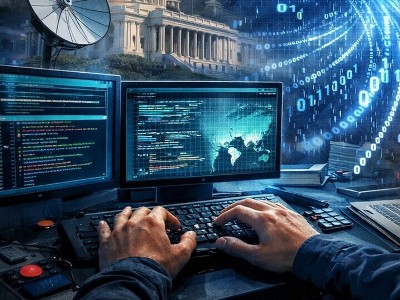
The technology most people use as a conversational tool for everyday tasks is reportedly helping American military aggression — and there is almost nothing we can do about it, writes Chris Stokel-Walker in The Guardian.
Over the past three months, the Trump administration has reportedly used AI twice to achieve regime change — or, in the case of Iran, to come as close to it as possible while leaving ordinary Iranians to "finish the job." First, Anthropic's Claude AI model was allegedly used in both the planning and execution of the seizure of Nicolas Maduro in Venezuela. Then, last weekend, an AI tool was reportedly used to process intelligence that helped prepare the massive strikes on Iran — specifically for target identification and simulations.
Anthropic CEO Dario Amodei found himself in an intensely public conflict with the US president after refusing to loosen two "red lines" for Claude: prohibiting the use of AI for mass domestic surveillance and for fully autonomous weapons capable of selecting and striking targets without meaningful human oversight. OpenAI quickly struck a deal with the Pentagon, claiming the contract terms actually provide stricter safeguards than what Anthropic wanted.
Regardless of the specific terms, the key point is this: a tool originally created to summarize emails and help write cover letters is now part of a chain that converts information into violence.
Questions like "Who should control AI and what happens if it is used for military purposes?" were once discussed only in academic circles. When special forces took Maduro in January and bombs began falling on Iran — apparently with AI assistance — that picture changed sharply.
The core principle of armed conflict was to possess terrible weapons but not use them. Now that restraint is gone. More and more countries will use AI in military planning — and the first war-gaming scenarios suggest AI may be quick to "press the button" on nuclear weapons.
When military historians analyze recent events, they will likely see the use of AI as a turning point comparable to the use of nuclear weapons in Japan: a moment with a clear "before" and an uncertain "after."
What can be done? Practically nothing now — there should have been a complete ban on AI use in military operations. The international community must urgently push the Trump administration not only toward responsible AI use in warfare, but toward binding restrictions: international agreements, transparent procurement standards, and effective oversight. Because if the world's most powerful military normalizes the use of consumer-grade AI for regime-change operations, we will find ourselves "through the looking glass" — in a completely new and far more dangerous world.