make preferable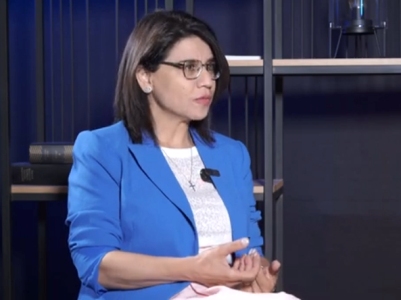
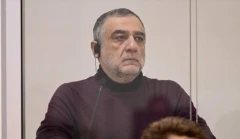
The judicial farce against Armenian prisoners in Baku has concluded, and 19 Armenians remain imprisoned, now with their so-called “verdicts.” During the “trials,” Azerbaijani media periodically published photos and limited information from the hearings, keeping the issue on the public agenda.What should be done now to ensure the public does not forget the prisoners? Is it right to continue speaking about them, or should efforts focus only on action? And how did Armenian media cover the so-called “trials”? NEWS.am spoke with communications and public relations specialist Zoya Barseghyan.
Ms. Barseghyan, it sounds paradoxical, but the end of the farcical trial in Baku may, in some sense, create an information problem. When the hearings began about a year ago and the first photos of the prisoners were published, the public reaction was quite emotional. Later, the release of photos and information from the hearings helped keep the issue on the public agenda. Some also say that we should not talk too much about the prisoners, but rather act. As a communications specialist who follows these processes, what is your approach to this issue?
y approach is that we must continue to speak about the issue - especially as we enter this new stage -and raise it in every possible way, as long as even one Armenian remains in Baku. That does not hinder action at all. We have discussed this topic many times with human rights defenders, specialists working in the field of human rights protection, and communication experts, and everyone shares the same opinion: silence means oblivion. International practice also testifies to this - let us recall the same consistency of Israel in the matter of securing the release of their prisoners.
Those who say we should not speak too much or raise the issue because it brings no benefit are either mistaken or deliberately trying to push the topic into oblivion. So, as a communications specialist, I also urge you to use every opportunity to raise the issue and keep it at the center of public attention.
The issue of Armenian prisoners illegally held in Baku is an unresolved and important humanitarian problem. We cannot feel calm or safe, nor pretend that nothing is happening to us, while Armenians are being illegally detained and tortured there, especially taking into account that the activities of the International Committee of the Red Cross have been suspended in that country.
We know that you have also been following the media coverage of the trials. What observations do you have so far?
The case itself is unprecedented: citizens of our country are being “tried” by an authoritarian-dictatorial state, which oppresses and persecutes even its own citizens. Prior to the start of the trial, Azerbaijani media were reporting that this would be a “Nuremberg Trial.” However, once the hearings began and it became clear that, apart from the state news agency, even other local media outlets were not allowed into the courtroom — let alone international media — there were openly voiced complaints on certain Azerbaijani Telegram channels questioning what “Nuremberg” they had been referring to in the first place.
Brief reports about the hearings were published in various Azerbaijani media outlets, but the photographs and footage circulated were identical across all of them. As professionals, we understand very well that it is impossible for two photographers to capture exactly the same shot. A more detailed Information about the hearings and the remaining photos were published late in the evening on AZERTAC, the state news agency — naturally, only after inspections and “corrections.”
Incidentally, at various levels in Azerbaijan, there is a fondness for referencing the Nuremberg Trials in an attempt to lend some weight to their farce. In reality, this only works against them. They are probably unaware that the Nuremberg Trials remain unprecedented not only in the history of international judicial practice, but also in the history of journalism, due to the extraordinary participation of international journalists: more than 300 journalists from over 30 countries attended the proceedings.
When the trials began, one of the main issues for us journalists and media outlets was how to cover them. That they needed to be covered was not up for debate — at least in our editorial office — but the question of how to cover them did raise professional questions. Now that the trials have ended, how do you assess the coverage as a specialist?
It was, indeed, not an easy task. In the history of international journalism it is difficult to recall a case where citizens of one country are tried in another country, and the trial is closed not only to the media of the defendants’ home country, but also to international media and even to media within that very country in question.
As for the form of coverage, the very nature of the case posed a real challenge for our media. However, drawing on my previous experience as a journalist and editor, I can say that there is no situation that cannot be addressed within the framework of professional journalistic standards and ethical norms. Typically, when dealing with sensitive issues, editorial policies are developed based on professional ethics and principles. For example, on the issue of the Armenian Genocide, a number of major Western media outlets had clear editorial policies and used that exact term, regardless of whether their own country had officially recognized the Genocide.
Professional journalists are always able to find the necessary balance. In this case, it was important to cover the issue without amplifying or importing Azerbaijani false narratives into the information space, and the overwhelming majority of Armenian media outlets followed precisely that strategy.
To the credit of our media, I should note that each outlet, in line with its own style and format, found the right balance in its coverage. Approximately 25 -30 major news-producing outlets(themajority of media outlets) consistently covered the issue throughout.
But, there seem to be several media outlets that did not cover the issue at all. For example, we raised this topic in the National Assembly and addressed a question to Tigran Hakobyan, chair of the Commission on Television and Radio, seeking clarification as to why, for instance, Armenia’s Public Television did not cover the issue of the prisoners.
Monitoring indicates that all Armenian media outlets have, at least to some extent, addressed the issue. The difference lies in the level of engagement: there has been active, moderate (episodic), and passive coverage. As I mentioned earlier, around 25-30 major media outlets covered the issue actively.
Public Television has been among the passive outlets. Its news program covered the launch of the trial with a fairly extensive report, but afterward, it addressed the topic only within the framework of statements made by officials. If a public official spoke about the prisoners, the channel would briefly mention it in that context.
What distinguished the coverage by other outlets?
The issue was mainly covered in two or three ways. The most common — and, in my view, the most effective — approach, which provided readers, listeners, or viewers with as complete information as possible under the circumstances, was for media outlets to take the purely factual information from Azerbaijani sources (since there were no alternative sources available) and present it alongside assessments from experts and analysts.
Another common format was to publish brief, straightforward news reports first, followed later by expert commentary and interviews.
In addition, many outlets published standalone interviews, independent of specific hearings, with human rights defenders, lawyers, various specialists, relatives of the prisoners, and representatives of the International Committee of the Red Cross. They also raised the issue on international platforms or during visits by foreign officials.
In summary, Armenian media largely adopted an approach that ensured the trials were covered while deliberately avoiding the repetition or dissemination of Azerbaijani false substantive narratives, which, in this context, was a professional and responsible strategy.