make preferable
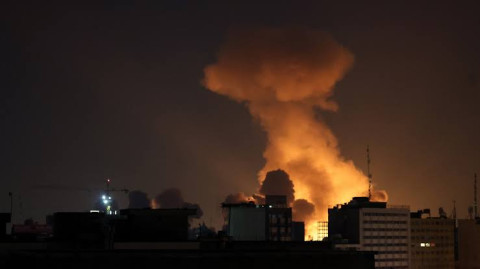
Azerbaijan became the latest country to be drawn into the US-Israeli war on Iran after four drones, which it said were launched from the Islamic Republic, struck its exclave of Nakhchivan on Thursday, damaging infrastructure and injuring two civilians, the Middle East Eye (MME) writes.
Iran, for its part, has rejected the accusations.
Analysts say Iran's response to the war has centered on its asymmetric regional influence.
For decades, Gulf states have promoted themselves as islands of stability in a volatile region, attracting global investors, tourists and multinational businesses.
Iran's military campaign appears designed to undermine that perception and demonstrate that the costs of the conflict will extend far beyond its borders.
The upheaval across the region may be intended to push regional governments to pressure Washington to end the war.
Giorgio Cafiero, the chief executive of Gulf State Analytics, a Washington-based geopolitical risk consultancy, said the instability could encourage Gulf states "to see to it that the United States agrees to halt its aggression."
According to Farid Shafiyev, the chairman of the Baku-based Center of Analysis of International Relations, Azerbaijan has tried to remain neutral in the conflict.
Following the incident, Azerbaijan closed its southern airspace for 12 hours and shut its border crossings with Iran to cargo trucks, including transit shipments.
The move disrupted one of the shortest land routes connecting Iran with Russia.
Azerbaijani President Ilham Aliyev also threatened to respond militarily, but there has been no official response so far.
Tehran has long viewed Azerbaijan's relationship with Israel with suspicion.
Iran has accused Azerbaijan of allowing Israel to conduct espionage operations against it from Azerbaijani territory.
A political analyst in Tehran, who spoke on condition of anonymity, told MEE that Iranian officials believed Israel had used Azerbaijani airspace during a previous conflict.
Baku has rejected the allegation. Still, the analyst said Iranian leaders increasingly view the current war as an existential threat.
"Iran does not want a conflict with Baku," the analyst said. "But Baku now is an asset for the US and Israel."