make preferable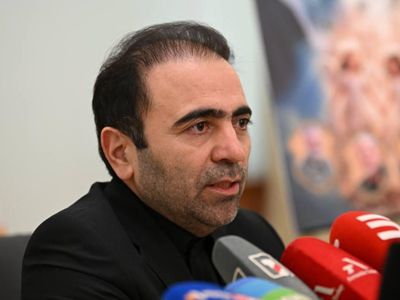
NEWS.am presents an exclusive interview with the Extraordinary and Plenipotentiary Ambassador of the Islamic Republic of Iran to Armenia, Khalil Shirqolami, on the ongoing war against Iran and possible scenarios for its development.
Mr. Ambassador, in your assessment, does this war tend to become prolonged, or is it realistic to expect it to end within the coming weeks?
For Iran, the duration of the war is not a concern. What matters is the creation of a situation in which the aggressors understand how costly and consequential a war against Iran can be, and, as a result, never again consider resorting another aggression. The timeline for ending the war depends on the aggressors — they must cease their aggression and guarantee that they will not resort to such actions again. We will continue our self-defense for as long as necessary and have no concern about time. Therefore, the war may end very quickly, or it may last weeks or even months. Iran is prepared for all possible scenarios.
Under what conditions would Iran agree to a ceasefire?
Based on the experience of the 12-day war, Iran will not agree to a premature or incomplete ceasefire. A ceasefire that the enemy seeks to obtain while under pressure, and which contains no commitment to refrain from renewed aggression, is not acceptable to Iran. Any ceasefire agreement must be a written document based on guarantees of non-aggression, and must also include a clear resolution of the issue of damages inflicted on Iran.
Turkey recently accused Iran of launching a ballistic missile toward its territory. It was already the third such incident. Tehran assured Ankara that the missiles were not launched from Iranian territory. What is happening? Are there any assumptions about where they could have been launched from and for what purpose?
In this war, we have witnessed numerous false-flag operations aimed at creating problems between Iran and its neighbors. Such incidents occurred in Nakhchivan, Oman, Saudi Arabia, and Turkey. The missiles that fell on Turkey must also be viewed in this context. Israel was behind some of these incidents, while in the Persian Gulf region, other actors were involved. We have previously stated on multiple occasions that U.S. military bases in countries neighboring Iran, which are used for offensive operations against Iran and in support of those operations, are legitimate targets for our counterstrikes. The purpose is to prevent aggression against Iran and to organize the country's self-defense. We do not view strikes against those bases as attacks against our neighbors. These countries must undoubtedly bear responsibility before the Iranian people, as attacks on Iran were carried out from their territory, and hundreds of Iranian citizens have been killed. They are in the position of the obligated party, not the claimant.
The strike on Nakhchivan's territory by drones created tension in Iran-Azerbaijan relations; Aliyev even threatened retaliatory measures, though Tehran again assured that the drones were not launched from Iran. Was such a reaction unexpected for Tehran, and what was it driven by?
The Republic of Azerbaijan's initial reaction was emotional, hasty, and inappropriate. Logic dictates that an investigation should be conducted first, and only after its results are known should a position be taken. Of course, very shortly afterward, they realized the mistake of their stance and hastiness and tried to rectify the situation. In general, a harsh and hasty position constitutes unfriendly and provocative behavior. In all likelihood, certain anti-Iranian elements had a hand in shaping that hasty position.
Has the issue between Tehran and Baku been resolved, or is it too early to say?
Yes, the misunderstanding that arose has been resolved. The Iranian side reaffirms that the Azerbaijani side must not fall under the influence of Iran's enemies and must not enter into a destructive and dangerous game. Iran considers it its duty to preserve the security and stability of the South Caucasus, and the presence of U.S. and Israeli elements undermines regional security and stability. Therefore, the Republic of Azerbaijan must be very vigilant.
There are suggestions that the U.S. and Israel are pushing Azerbaijan and Turkey to join the war against Iran. Do you see such a tendency?
It is possible that the aforementioned provocations were aimed precisely at dragging the Republic of Azerbaijan and Turkey into the conflict. Therefore, those countries must be discreet. Turkey understands that the goal of the U.S. and Israel is to establish Israeli dominance in the region through the war against Iran and to advance the "Greater Israel" project, and views this aggressive war against Iran as an important component of that puzzle. For this reason, Turkey is vigilant so as not to become a victim of the Zionists' conspiracy aimed at weakening Iran. The Azerbaijani side must also be more vigilant, as any involvement of that country in such a situation under the influence of Iran's enemies will lead to nothing but harm.
Azerbaijan's president once again insisted days ago that their territory will under no circumstances be used in the war against Iran. Has that assurance fully dispelled Tehran's concerns?
We hope that this assertion will be fully implemented. According to the Iranian side's assessment, as of now, the territory of the Republic of Azerbaijan has not been used against Iran during the war. This also contributes to the preservation of that country's security and stability. We are carefully studying all U.S. and Israeli operations against Iran, their sources of origin, and the support provided in their direction.
What expectations does Iran have from neighboring countries, including Armenia, in the current situation?
Our expectation from neighboring countries, including Armenia, as well as from the entire international community, is to warn against the illegal and inhumane aggressive actions of the U.S. and the Israeli regime, not allowing their unlawful actions to endanger global and regional order and security, as well as the stability of the global economy. There is a certain risk that the expansion of this war will affect many other regions.
Iran has repeatedly expressed concern about the creation of TRIIP through Armenian territory. You recently stated that Tehran has received assurances from the Armenian government that Armenian territory will not be used against Iran and that TRIIP will not pose a threat. Now that the U.S., together with Israel, has started a war against Iran, has Tehran's position on TRIIP changed in any way, and have concerns on this issue increased?
When discussing the TRIIP issue, we maintain the principle of not making prejudiced judgments and basing ourselves on mutual trust between Iran and Armenia. Naturally, the aggressive and hostile stance of the U.S. toward Iran makes our country sensitive to any kind of American presence in areas adjacent to our borders. At the same time, the Armenian authorities have repeatedly stated that they will not allow this road to acquire a security or military character. We hope that the ongoing consultations will lead to the effective use of transit opportunities for Armenia and to the resolution of concerns related to Iran's security.
Hayk Sahakyan