make preferable
Armenian Prime Minister Nikol Pashinyan is going to Russian President Vladimir Putin, where he is planning to discuss issues of strategic partnership with him. This is happening at a time when Pashinyan’s position in Armenia is weakening before the parliamentary election in June, and the Armenian public has not yet forgiven him for the loss of Nagorno-Karabakh, reports NTV television of Russia
The Armenian premier intends to discuss the prospects for bilateral relations with the Russian president, and this is happening at a time when Pashinyan's domestic political situation is becoming increasingly unstable. The NTV report notes that the head of the Armenian government traditionally turns to Russia when he faces serious difficulties within Armenia.
According to the report, the main problem one remains the loss of Nagorno-Karabakh. A significant part of Armenian society has not forgiven Pashinyan for the loss of this region, and the Armenian refugees from there openly accuse him of betrayal.
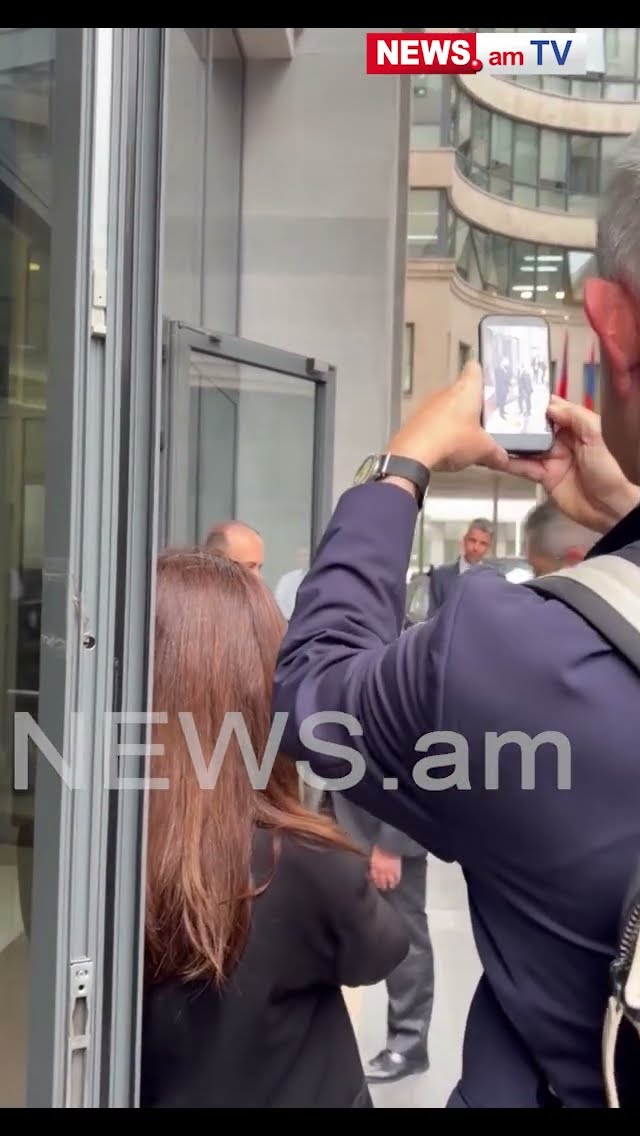
As NTV reports, an election campaign is underway in Armenia against the backdrop of all this: parliamentary elections are approaching, but the ruling party’s ratings are far from encouraging. Pashinyan is actively working on social media and communicating with the people, but, as the report emphasizes, his contacts with ordinary citizens are increasingly turning into uncomfortable situations.
An additional irritant is Pashinyan’s plans to change the constitution of Armenia, as he intends to remove any mention of Karabakh from it. Azerbaijan is also striving for this. The report quotes Pashinyan himself, who stated that he is ready to hold as many referendums as necessary to achieve the desired result.
The Russian NTV report reflects also on the conflict between the Armenian government and the Armenian Apostolic Church: for example, the fact that an archbishop was detained, and the fact that during the premier’s visit to a church, his bodyguard had to push back parishioners.
As the Russian NTV notes, Pashinyan continues to strike a balance in foreign policy. In the European Parliament, he warned about the “threat coming from the north” and the ties between the Armenian opposition and Russia’s oligarchs, while in Moscow he is preparing to negotiate a strategic partnership.
The West, in turn, is not left out. The report mentions that NATO Secretary General Mark Rutte spoke about Armenia’s aspiration towards the alliance, and the EU foreign policy chief Kaja Kallas proposed sending a rapid reaction force to Armenia to counter foreign interference in the parliamentary election in June. Russian NTV television sarcastically notes that "such a landing by Western political technologists" in itself constitutes pressure on a sovereign state.