Preferred
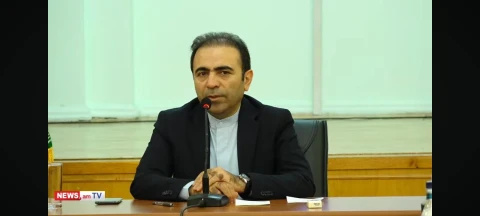
We looked forward to what we were going to gain. I cannot agree that the incumbent authorities have returned territories. No, they lost them, they handed over land. These are two different things. They capitulated Armenia, defeated our army. This is what third President of Armenia Serzh Sargsyan said in an exclusive interview with ArmNews TV.
"Following our achievements in the early 1990s, throughout the 2000s, from the very first day of coming to the presidency, I have said in various terms that I see the solution to these problems only through compromise. Do you remember me saying in parliament that Aghdam was not my homeland? Do you remember that it was not only manipulated then, it was exploited recently, when insane people, people who do not have a good idea of the reality, took selfies against the background of Aghdam and said that Aghdam is their homeland. We all saw how they kept that homeland. So please always distinguish between giving and returning."
Serzh Sargsyan said he didn’t agree that the Armenian party artificially delayed the status-quo after the negotiations in Kazan.
"I cannot agree not only with the theory of procrastination, with the idea, I do not agree with your idea that the Kazan document presupposed territorial concessions. The Kazan document presupposed the status of Nagorno-Karabakh outside Azerbaijan. I say again, throw away from your head what we were going to give, you think about what we were going to have. We would have an internationally guaranteed promise that the final status of Nagorno-Karabakh should be determined by the free will of the people of Nagorno-Karabakh, which would have a binding legal force, the agenda of which is not limited by anything. It allowed us to go very calmly through the solution of the problem, yes, through compromises. In addition, we could have an interim status for Nagorno-Karabakh, which, like the President of Azerbaijan, the Co-Chairs described as “today’s reality plus.” With this intermediate status, Nagorno-Karabakh received 7 security guarantees, the first point of which was the following: the security of Nagorno-Karabakh is ensured by the NKR self-defense forces, Armenia was to be officially recognized as the guarantor of NK’s security, the results of elections and the judicial system in Nagorno-Karabakh should be recognized by the international community, the involvement of peacekeepers, etc. - I will return to that now. And NK was getting the right, please listen carefully, to join the international structures, for the membership of which independence was not a necessary condition, and that was a plus. And until the day of NK independence, before the day of the referendum, we had the Lachin-Kelbajar regions under our control."
According to Serzh Sargsyan, it was about the return of 5 districts.
"There was no talk of a land border or a corridor. We would not have given the Lachin region or Karvachar. That is, in terms of Karvachar, there was some interconnectedness. I do not want to go into details, because it is first of all for specialists, not for the general public. Four committees were to be set up: one of those committees should deal with the referendum, the other – with the evacuation of our population, the Armenian population, the Azeris from Karvachar, but it was never handed over under the control of Azerbaijan, they were interconnected. The further the idea of the referendum went, the closer the day got, the more this problem might be solved in parallel."
According to the former president, the returning Azeris weren’t going to participate in the referendum, and it was clearly stated who would participate in the referendum, etc. The agenda was not limited to anything. In other words, it meant that the NKR authorities had to decide on what agenda the referendum would take place.
"I will continue now. As it is known, the Azeris refused to sign the document in Kazan, but on June 11, 2011 we received a letter signed by Russian Foreign Minister Sergey Lavrov that the talks were over, the text was finally agreed, on June 24 in Kazan it was proposed to sign the text. As far as I can remember, on June 23, President of the United States, Mr. Obama, called me and said that he strongly encouraged us to show courage and sign that document. I also received a letter to the same effect from the President of France, Mr. Sarkozy. In both cases, I replied that we were ready to sign this document, but I was almost sure that Azerbaijan would refuse to sign it. We went to Kazan, I talked about it in detail in the report with Kiselyov, etc."
In regard to the speculations of the interview, Serzh Sargsyan said this is done because the matter is viewed from a narrow perspective and on the part of “non-conservatives” because, according to him, they didn’t listen when he said that superstition would destroy us Armenians, and some day we might have to sing “Stepanakert-Stepanakert” in Yerevan.
"Anyway, Azerbaijan refused, after that there were meetings, some contacts, meetings even with Aliyev in Vienna, etc., but it must be said that the situation was relatively calm, there were no active negotiation processes as such. If you remember, some tension emerged in 2014. And, during the meeting with the head of one of the co-chair countries in 2014, he asked me directly, he said: “Serzh, can you honestly tell me your goal in the Karabakh issue? Do you want the problem to be solved or do you want to maintain the status quo?” I honestly said that I wanted to solve the problem. I did not want to leave this problem on the shoulders of the next generations. The next question came back, and in your opinion, how can this problem be solved? I also said the following directly: in my opinion, the problem could have two solutions: a final solution and a half-solution.
I see the final solution as follows: Azerbaijan recognizes that NK is independent, recognizes the fact of NK independence. In that case, I return to Yerevan and tell my teammates that we need to return those 7 regions held as a security belt, we keep a sufficient corridor to communicate safely with Nagorno-Karabakh instead of today’s 2.5kn-long one. Then I go to Nagorno-Karabakh, I convince my comrades-in-arms, the NKR leadership that this is the right solution. And when I get agreement in both places, we start to make this idea public. But I did not guarantee that I could implement this idea. But I was ready to take on the burden, because I was convinced it was the right solution. This was the first option.
According to Serzh Sargsyan, the second option was the half-solution and was as follows:
"Azerbaijan recognizes that the final status of Nagorno-Karabakh should be determined by the people of Nagorno-Karabakh without any time limits. Azerbaijan ought to accept it, the international community should confirm it. In that case, I return to Armenia, I assure my teammates that in case of such a half-solution, we are obliged to return 5 regions to Azerbaijan, get an interim status for Nagorno-Karabakh. That option was ruled out, because in that case the Azerbaijanis would never get back either Lachin or Karvachar. In other words, the point was that the date of returning Lachin and Karvachar to Azerbaijan was closely connected with the referendum on NK independence."
Is that why we said 5 + 2, not 7?
"Yes. In other words, both versions I mentioned were simply based on the Madrid principles, the Kazan document. And it is not accidental that the Russian Foreign Minister, the Co-Chairs, the Minsk Group Co-Chairs, the Russian representative Popov kept stating even until the last statement that any version more or less complied with the Madrid Principles of the Kazan Document."
According to Serzh Sargsyan, there is no Lavrov Plan as a document.
"First of all, I must say that the Lavrov Document did not exist as such. What do we call Lavrov document? The second version mentioned above, that is, a modified version of the Madrid Principles of the Kazan Document, was proposed by Lavrov on behalf of the Co-Chairs, and there was never a so-called negotiation process in which the Co-Chairs proposed their ideas separately. It always used to be mutually agreed. This is what is called Lavrov Document and Kazan Document. By the way, I am sorry to deviate a little, the Kazan document is the only document - at least until 2018 it was the only document - that became a working paper and is kept in the OSCE Depository. There was no other working document."
Serzh Sargsyan said he wanted to talk a little bit about this because many many do not have an accurate idea of what a working document means, what a proposal means, what a paper that you are given to get acquainted with means.
"A working document is the one through which the mediators introduce a solution, the parties say yes, the document can be negotiated and agreed upon. And the work starts according to the lines, principles, etc. That is a working document, not something that the Co-Chairs can often do by expressing their ideas in writing or orally.
There can be many ideas, but no further discussion is held when you get acquainted with an idea and say at once that it is impossible to discuss it. I suppose that as for the document forwarded to the parties in April 2019, including the Armenian side, the latter most likely said, yes, discussions can be held on that document. Otherwise, should it had been rejected, other proposals would have been submitted, or the co-chairs would say from the beginning that their proposals were rejected."
Was it in the logic of a phased settlement? What can we judge from what Lavrov said?
"Do you remember that Lavrov first announced about it in the spring of 2020, a year later. In other words, the Co-Chairs wanted to say that they had given a document to the parties; they had received assurances that it was possible to discuss and reach an agreement, but one of the parties, namely the Armenian side later refused to follow up the negotiations.
Yes, in my deep conviction, it was a phased version, because why should the Armenian side abandon the package version? As for why there was a phased version, it is a matter of another discussion. No, I can almost imagine why this happened, but before that I would like to explain once again what a package version means, and what a phased version means.
A package version is when the negotiating parties, the parties that have reached an agreement, know everything from the first step to the last one. Starting with something, the parties know what they will achieve in the end? And one of the most important features is that after getting something in the package version, neither of the parties can turn the table, saying I do not negotiate anymore, because compromise is binding, equal, you can lose something in case of withdrawal.
It is obvious that the package version cannot be fully implemented at once, it is implemented in stages. The charm of this package is that you get something and in return you give away something else. If the process stops halfway, you are no longer giving up your vital interests. And the phased option is when you make concessions against something unequal and a pledge that it may prove advantageous in the future, while it is a matter of appreciation for being such."
Serzh Sargsyan said he was not only ready to sign, but exclusively agreed to remain the Prime Minister of Armenia to materialize that option.
"And I did not need to sign it in secret, but of course, when we would have achieved what we were striving for, then that option - I do not say we would put it up for a referendum - would have been made a subject of public discussion. I was not sure that the majority of our society could have supported it, but if we had the opportunity to turn the wheel of history and return to 2018, I think 99% of the population would have been in favor of it."
Asked why he did not say it openly and honestly then, Serzh Sargsyan said he had said it openly and perhaps he hadn’t said much.
"But I said that in the days of the April events, when more than 60 beneficiaries of the Luys Foundation sent me a letter urging me to resign. I explained to them that the only reason I was staying was to solve this problem. I have said about it many times before. I admit my failure, maybe I said little, but if I had said too much, would it have helped the case? But what would we get as a result? I want to say about this too, it is quite interesting. As it is clear that Azerbaijan was reluctant to continue negotiations on those conditions, we thought of an option to have three documents: to sign a document with Azerbaijan that did not fully meet our minimum wishes. I mean the following: the first point, when talking about the free will of the people of Nagorno-Karabakh, was formulated, as I said, in the following way: the final status of Nagorno-Karabakh is determined by the free will of the people of Nagorno-Karabakh, which has a binding legal force. That last paragraph, the last phrase was categorically not enough for Azerbaijan, because the first two formulas fitted into their Constitution, which provides that there can be no referendum on the territorial integrity of Azerbaijan. That is why the idea was to sign a document with Azerbaijan without the aforementioned clause: “the agenda is not limited to anything.” Simultaneously we would have a statement issued by the Co-Chairs, featuring that missing clause. Also, we would have a relevant UN Security Council resolution within reasonable deadlines."
According to Serzh Sargsyan, the agreement had been reached in the fall of 2016, after the April war.
"In other words, this once again refutes the stupid idea that we allegedly agreed to return 7 regions to Azerbaijan following the April war. We cannot rule out that those drafts will be published sooner or later. I just want to stay within the bounds of ethics. I do not mean those people who consider themselves my opponents, but the co-chairs. Patience always brings good results. For about two and a half years I refrained from disclosing what we had been negotiating about before 2018, did I? But the time came and it was officially posted on Russia’s Foreign Ministry website…"