make preferable
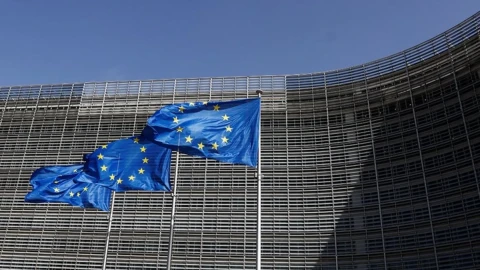
Those who are attempting to convince us that the West is the salvation of Armenia are adventurers, they live in illusions because the EU has no clear desire to assist Armenia and encourage its membership in the EU. Tigran Yeganyan, an active member of the Armenian community in France, an orientalist, and an expert on international affairs, said this in an interview with journalist Aza Babayan.
“Those who are attempting to convince the [Armenian] public that the EU is the path to [Armenia’s] salvation are adventurers, criminals. They are leading Armenia to destruction,” he added.
Speaking about relations between France and Azerbaijan, Tigran Yeganyan said that although these relations are bad, France is very cautious and does not take active steps to sever diplomatic ties with Azerbaijan—recall its ambassador to Azerbaijan, or close the Azerbaijani embassy in France.
“France’s foreign policy is very weak, France follows the principles of the EU, and the EU constantly says: ‘try to find a common language with Azerbaijan so that Azerbaijan does not fall under the influence of Russia.’ We must realize that France’s position has weakened greatly because France is experiencing an economic crisis, its positions are retreating everywhere,” added the international affairs expert.
According to Tigran Yeganyan, Armenia can follow the example of the multilateral foreign policy of India and Azerbaijan.
“Armenia needs a new, strong strategic mind, it needs to review its policy with the [Armenian] diaspora. Without a demographic base, Armenia cannot survive. If Armenia does not change its attitude towards the [Armenian] diaspora and does not develop bold repatriation programs, Armenia will disappear. There is a new generation in the [Armenian] diaspora that is truly concerned about the future of Armenia,” he said.
Tigran Yeganyan noted that at the moment he does not see forces or individuals in Armenia’s political arena who can lead the country along the path of revival, but there are people in civil society who realize that the paradigm is to follow the path of educational reforms.
And when asked by the aforementioned journalist what question he would ask Armenian Prime Minister Nikol Pashinyan, the orientalist replied: “I must admit that Nikol Pashinyan himself does not know what he thinks; it is difficult to understand him. He says such extremely contradictory things that neither the West nor the Armenians trust him. I realize that he wants to gain time, stay in power, avoid a new war with Azerbaijan at all costs—even at the cost of dignity.”