make preferable
Peugeot has actually admitted: without Chinese technology, it is becoming increasingly difficult to compete in the world's largest automotive market.
The French automaker announced that its new models for China will be built on the basis of technology from its Chinese partner Dongfeng, and their production is planned to be carried out at the Wuhan plant. At the same time, these cars are intended for export not only to China, but also to foreign markets.
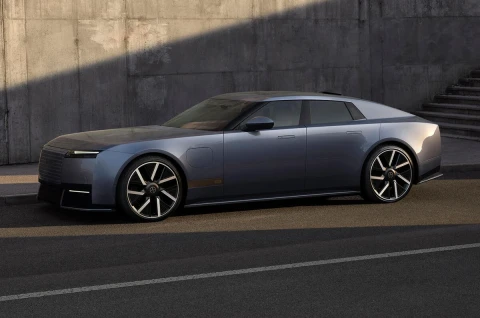
Peugeot's sharp turn became known during the Auto China 2026 auto show in Beijing, where the company presented two concepts: Concept 6 and Concept 8. They plan show what the new generation of large sedans and crossovers of the brand will look like.
The design has become significantly more aggressive: narrow LED strips, a lion logo with a backlight instead of the usual radiator grille, and sharp body lines are clearly aimed at the preferences of the Chinese market.
But the most important thing is not the appearance, but the technical basis. Peugeot openly declares that it will use Dongfeng platforms and technologies. This, in fact, means that the European brand is increasingly relying on the Chinese engineering base in the era of electric vehicles and “smart” cars.
Peugeot CEO Alain Favey directly called China a market of critical importance for the company’s future. According to him, it is here that the main trends in the automotive industry are now taking shape, from batteries and software to autonomous control systems.
Automotive commentators note that this is no longer just a cooperation between a Western company and a Chinese manufacturer, but a change of roles in the global industry.
If in the past, European brands brought technology to China while Chinese factories provided cheap production, now more often it is Chinese companies that become the source of platforms, batteries, and digital solutions.
The first production cars of the new series shall be released in 2027.