make preferable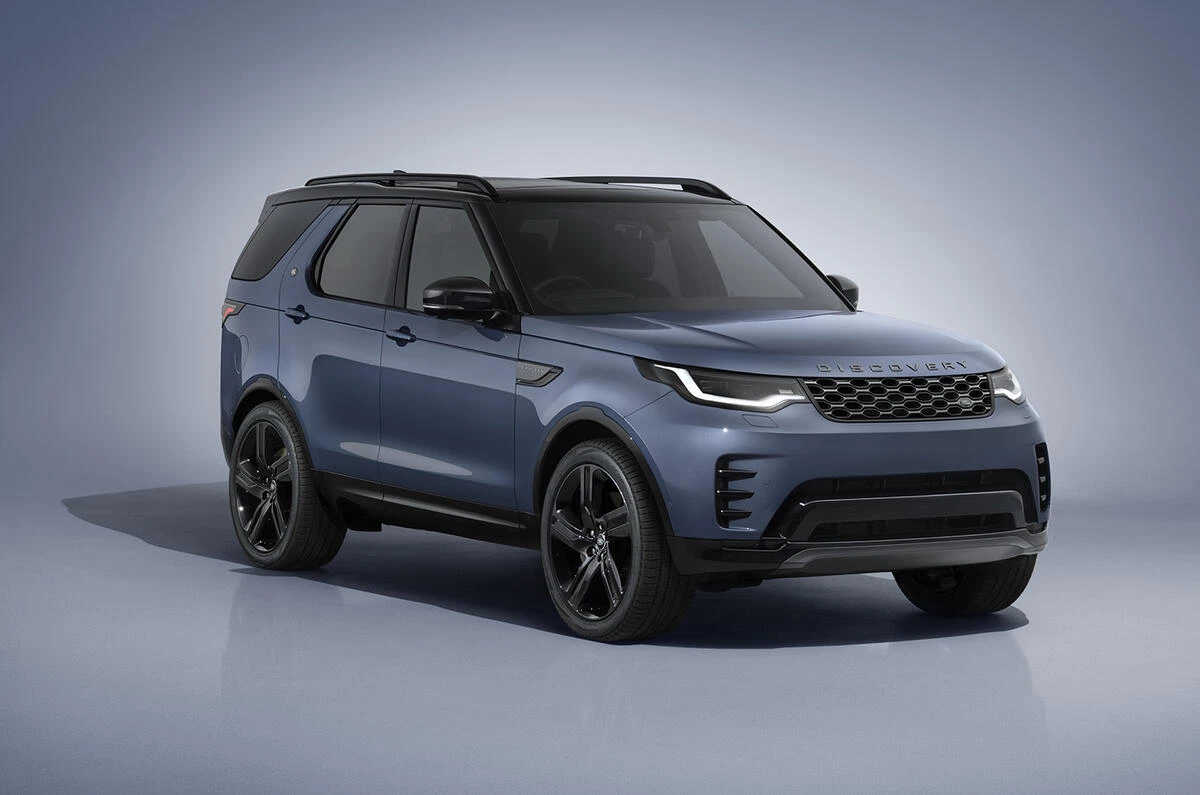
Land Rover has revealed a high-spec new edition of the Discovery—which could be the final version of the nine-year-old seven-seater before it comes in for a dramatic reinvention, Autocar reports.
The company had already used the Landmark name for the farewell series of the Discovery 2, Discovery 3 and Discovery 4 models, which were released shortly before the end of their production. Therefore, the appearance of a new version may indicate that the fifth generation of Discovery, which debuted in 2017, is coming to an end.
The new modification, costing about 76 thousand pounds, occupies an intermediate position between the S and Tempest trim levels. The car comes in a bespoke shade of Tasman Blue paint, which refers to the historical Clearwater Blue shade, which was painted on the first Discovery.
In addition, the special version is distinguished by a number of unique elements of the exterior design and interior. The standard equipment includes a panoramic sliding roof and a refrigerator built into the center console. All cars in the Landmark version are equipped exclusively with a three-liter inline six-cylinder D350 diesel engine. The gasoline and plug-in hybrid versions of the Discovery are no longer offered.
Today, the Discovery remains not only the oldest model of Jaguar Land Rover, but also one of the longest-selling cars in the UK market without a generation change. Autocar contacted the carmaker, asking if the Landmark is a farewell series of the current Discovery.
However, a representative of Jaguar Land Rover declined to comment on the model's future plans. Mark Cameron, who leads the Defender and Discovery brands, previously had admitted that demand for Discovery has decreased significantly since the appearance of the new Defender.
“If you look from a product perspective, Defender came in and sat quite squarely on top of Discovery and cannibalized a lot of that business,” he had told Autocar. He had said JLR was working on "recreating what Discovery stands for," and said the priority was to "make sure it sits in a really unique territory."
A successor model would be likely to use the similarly sized Range Rover's MLA architecture, which can accommodate electric, combustion, and hybrid drivetrains—in keeping with JLR's renewed commitment to preserving a multi-powertrain offering across its model lines for the medium term.