make preferable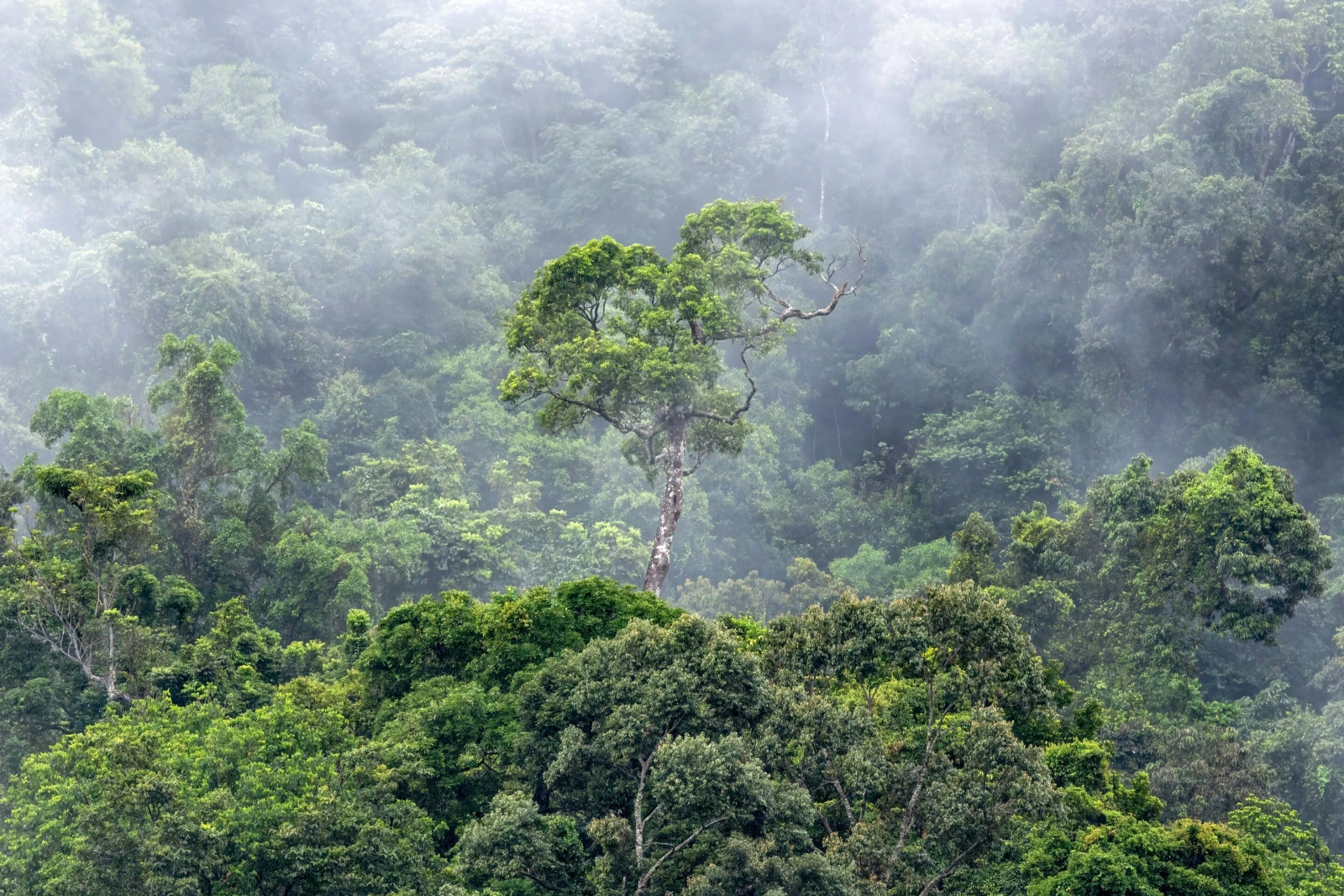
South American tropical forests, including the Amazon rainforest, may lose their ability to absorb carbon dioxide from the atmosphere due to increased climate extremes, scientists warn. The researchers published their respective findings in the journal Nature Climate Change.
The Amazon rainforest is the largest terrestrial carbon store on the planet, storing an estimated 123 billion tons of carbon. Through the process of photosynthesis, trees absorb CO₂ and convert it into biomass, helping to slow climate change.
However, a study by an international team of scientists has shown that during a strong El Niño, South American tropical forests may practically cease to function as carbon absorbers.
During periods of abnormal warming and prolonged drought, trees close their leaf pores to retain moisture. This reduces the entry of the amount of carbon dioxide needed for growth. At the same time, the risk of tree loss increases, and the carbon stored after their decay is returned to the atmosphere.
An analysis of more than 500,000 trees studied over 30 years in six South American countries has shown that the Amazon's peripheral forests, where the climate is already hotter and drier, are particularly vulnerable.
Scientists noted that during the powerful El Niño of 2015-2016, some parts of the tropical forests practically stopped absorbing carbon. Large trees were especially hard hit, and their loss rate increased significantly compared to normal periods.
Researchers attribute this not only to a lack of carbon for growth, but also to so-called “hydraulic stress,” a disruption in the movement of water inside trees due to extreme heat and drought.
Scientists warn that the combination of new warming waves, more frequent strong El Niños, and the already accumulated effects of droughts could lead to large-scale forest losses and carbon emissions.
If tropical forests stop absorbing CO₂ and start becoming its source, this could seriously complicate the fight against global climate change. Preserving the Amazon and limiting temperature increases remain key conditions for maintaining its role as a natural climate regulator.