make preferable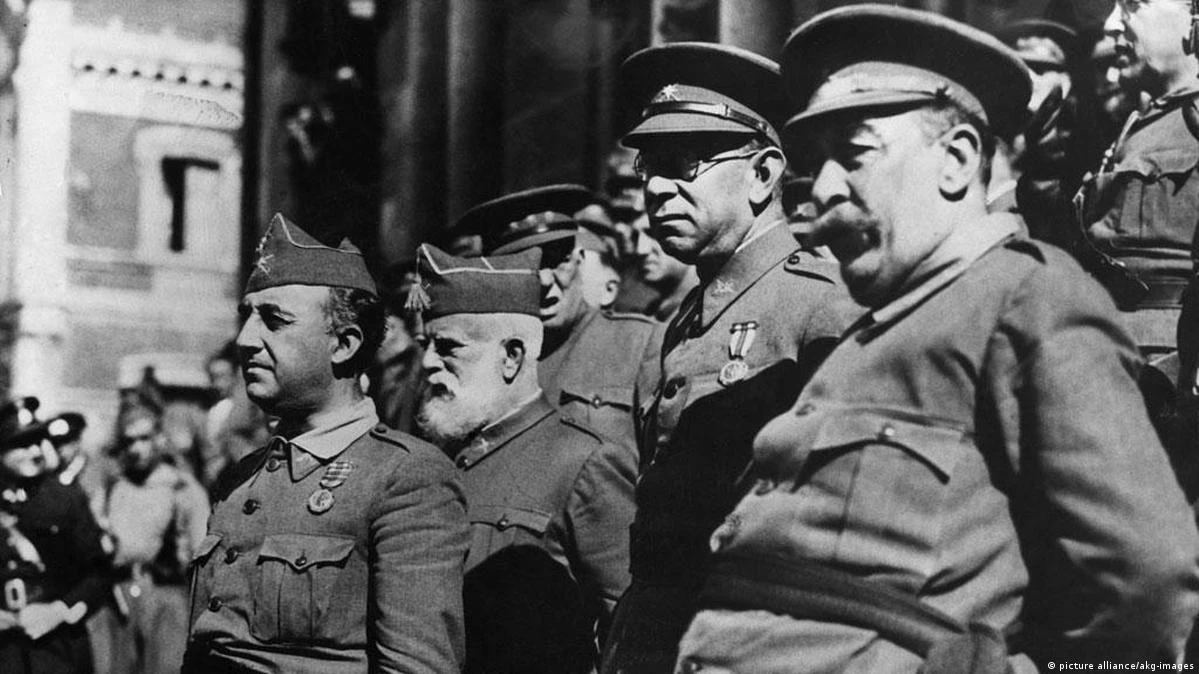
Exactly 90 years ago, the Spanish Civil War began between the republican government, which was supported by the Soviet Union, and the rebel forces of General Franco, who were backed by Nazi Germany and Fascist Italy. The rebels won, establishing their rule for several decades. Democratic Spain has long condemned Franco’s dictatorship, but some aspects of Stalin’s USSR’s involvement in that war also raise questions.
After the military uprising began in 1936, Stalin sent food, fuel, weapons, and military specialists to Spain. According to historians’ estimates, the USSR supplied hundreds of aircraft and tanks, thousands of artillery pieces, machine guns, and rifles. More than two thousand Soviet military personnel took part in the conflict, and 127 of them were killed.
One of the most controversial issues is the fate of Spain’s gold reserves. To pay for Soviet aid, the republican government transported about 510 tons of gold to the USSR — approximately 73% of the country’s national reserves. For decades, critics claimed that part of these funds had been appropriated by Moscow. According to Moreno Diaz, a history professor at the University of Madrid, the Spanish funds were in fact spent for their intended purpose, though with “some nuances.”
Diaz argues that the “Spanish comrades” were charged literally for everything: the transport of the gold to the USSR alone cost 51 million dollars. The Spanish side paid for the storage of the gold, security, smelting, and the maintenance of Soviet specialists. “The supply of weapons was also far from an act of solidarity or selflessness,” the DW interviewee believes. According to Diaz, weapons were sold to Spain at inflated prices. Despite this, thanks to Soviet aid, Madrid was defended in the first year of the war, and overall the republic held out for nearly three years.