make preferable
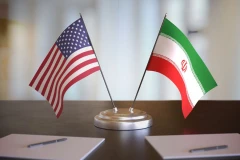
President Donald Trump’s foreign policy legacy will most likely be defined by Iran. At the moment, the situation looks bleak. The war has resumed, yet America has no realistic plan for victory, FT writes.
The American national security establishment is already lowering the bar for what can be considered success. At a meeting of the Aspen Security Forum, Mark Esper, who served as defense secretary during Trump’s first term, said the United States could be satisfied with achieving two main goals. The first is the resumption of shipping through the Strait of Hormuz without tolls being charged. The second is the imposition of restrictions on Iran’s nuclear program similar to those secured by the Obama administration. In other words, America’s goal should be merely to restore the prewar status quo.
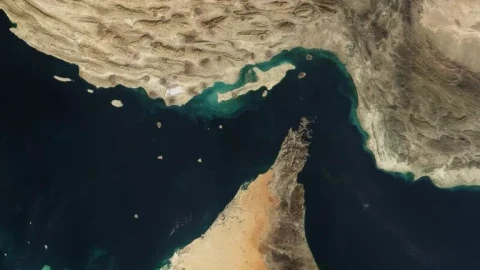
However, even these modest goals may prove unattainable. Iran is determined to charge ships for passage through the Strait of Hormuz, and for now it is difficult to imagine how America could prevent that. Transit fees through the Strait of Hormuz could potentially bring Tehran billions of dollars in revenue and give it a permanent lever of control over global energy supplies.
The United States has repeatedly said it will never accept such a state of affairs. However, an intensification of the bombing is highly unlikely to reopen the strait, and there is currently no desire in the White House to deploy ground troops. Retired American General Barry McCaffrey estimates that a ground operation in the Strait of Hormuz area would require a force of 600,000 personnel, and the campaign itself could drag on for a year. Meanwhile, Iran responded to the latest escalation of hostilities with its first attack on Saudi Arabia in recent months. This was a reminder that the Persian Gulf countries are extremely vulnerable to strikes on critical infrastructure such as desalination plants and oil platforms.
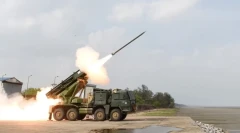
The Trump administration understands that the threat from Iranian missiles and drones will only grow in the coming years. Tehran has already demonstrated an ability to strike a wide range of targets — including Dubai airport, LNG facilities in Qatar, and American military bases in the region (on Friday, two U.S. service members were killed in Jordan). However, American strategists are concerned that the rapid development of drone and missile production technologies — combined with large-scale assistance from Russia and China — is highly likely to result in Iran possessing even more accurate and longer-range weapons within a few years.
Among the targets that could then be at risk of an Iranian strike are the nuclear reactor in Israel’s Dimona and the American base on Diego Garcia, which is of key importance for projecting U.S. military power in the Indo-Pacific region. During the current conflict, the Iranians have already launched missiles toward both sites, but unsuccessfully. However, the situation may change in the future.
So how can the United States respond to this grim prospect? Growing recognition that America may never succeed in containing Tehran through negotiations is bringing the idea of regime change in Iran back onto Washington’s political agenda. The overthrow of the Islamic Republic was the original goal of Trump and Israeli Prime Minister Benjamin Netanyahu when they launched the war against Iran on February 28. However, their hopes that military action would provoke a successful popular uprising against the Iranian leadership quickly collapsed.
For several months, the idea of regime change was abandoned while the United States tried to settle the conflict through diplomacy. But now that diplomacy appears to have reached a dead end, some members of the Trump administration are once again flirting with “Plan A” — the overthrow of the Iranian regime.
The most visible part of this strategy is increased economic pressure on Tehran. The United States has resumed a naval blockade of Iranian oil exports. In Washington, officials believe they will be able within a few months to cut off most of Iran’s oil revenues and trigger the country’s deepest economic crisis. Efforts are also underway to identify insiders within the regime who might be willing to cooperate with the United States and Israel. Against this backdrop, matters reached the incredible: Israel attempted to establish contact with former Iranian president Mahmoud Ahmadinejad, long known for his bloodthirsty threats against the Jewish state, but the effort was unsuccessful.
The idea of fanning an internal uprising in Iran is also gradually returning to the discussion. At an early stage of the conflict, Israel strongly proposed arming the Kurds. In Washington, that idea was rejected, but in the absence of better alternatives it may be revisited.
Washington’s unwillingness to come to terms with the possibility that Tehran could emerge from this war even stronger is entirely understandable. But the problem is that attempts to reverse the situation carry enormous danger.
Each new round of exchanges of strikes with Iran leads to new casualties and risks dragging America even deeper into yet another Middle Eastern quagmire. Meanwhile, the war with Iran has already led to the rapid depletion of American weapons stockpiles. It was widely reported that in the first few weeks of the conflict, the United States used up 30% of its stock of Tomahawk cruise missiles and 50% of its Patriot interceptor missiles.
Many of these munitions were intended for a potential conflict over Taiwan. Replenishing U.S. arsenals could take years, opening a potential “window of opportunity” for China to begin military action. As of today, the war with Iran is the biggest international crisis for the U.S. government, but it may create the conditions for an even larger crisis in the years ahead.