make preferable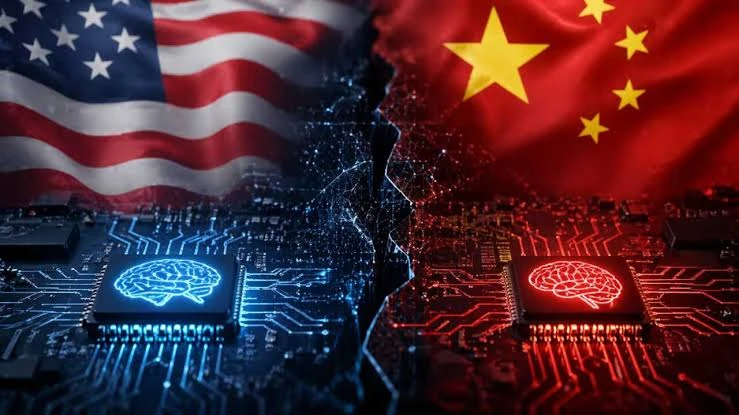
The Trump administration will investigate whether distillation of data from American systems was used to train Chinese artificial intelligence models. This was stated by US Treasury Secretary Scott Bessent.
He emphasized that the government does not intend to tolerate the “theft of intellectual property.”
Chinese models with open weights are gaining popularity and beginning to seriously compete with cutting-edge developments from American companies such as OpenAI and Anthropic. This is raising concerns among tech giant executives and government officials about preserving US leadership in the AI race. This month, Chinese startup Moonshot AI released a new model, Kimi K3, which outperformed products from American competitors on a number of industry benchmarks.
“If we see that foreign models are stealing the work of our leading companies, we have the ability to impose sanctions on them for that theft,” Bessent said on the Mornings with Maria program on Fox Business.
Bessent explained that the technical term for such a practice is distillation (distillation). It is an AI training method in which a compact and less powerful model is built based on the generated responses of an already existing, more capable system. Last month, Anthropic sent a letter to the US Senate Banking Committee, stating that Chinese tech giant Alibaba had carried out against it “the largest distillation attack known to date.”
According to Reuters, the US and China plan to hold talks on AI issues in September. Scott Bessent will represent the United States in these discussions.
“We are finding digital watermarks from our American large language models in many Chinese systems, and that is unacceptable,” Bessent stressed. “We will examine this issue in detail in the coming days and weeks.”
At the same time, both Anthropic and OpenAI have repeatedly faced similar accusations of copyright infringement in recent years.
In September, Anthropic agreed to pay $1.5 billion to settle a class-action lawsuit brought by a group of authors who accused the company of illegally downloading books from pirate databases. In addition, in 2023, The New York Times sued OpenAI and Microsoft, alleging copyright infringement in the use of its materials to train neural networks.