make preferable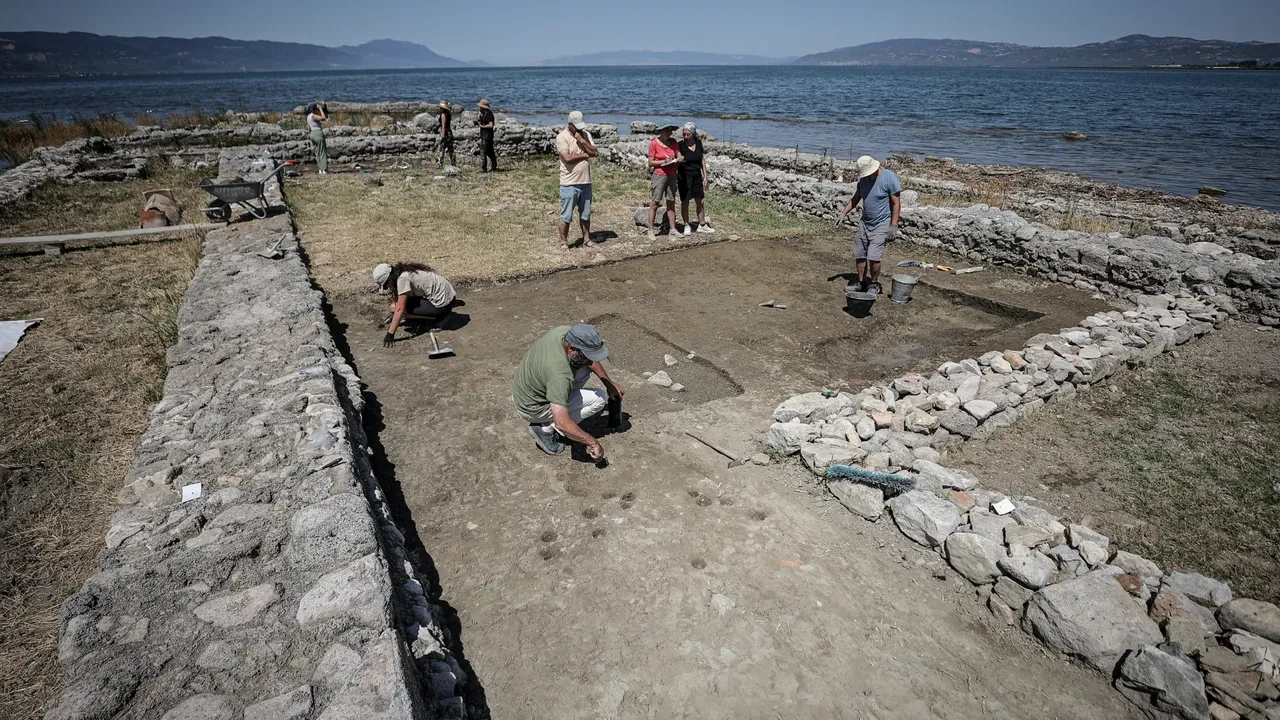
Archaeologists say they have discovered the site where the First Council of Nicaea — one of the most important gatherings in the history of Christianity — was held in 325. However, independent experts caution that the church found beneath the waters of Lake Iznik cannot yet be conclusively linked to the council sessions, Live Science writes.
Excavations are being carried out at the site of the ancient Greek city of Nicaea, located on the shore of present-day Lake Iznik in Turkey. It was here in the 4th century, at the initiative of the Roman Emperor Constantine I, that hundreds of Christian bishops gathered to resolve theological disputes. The council adopted the text that became the basis of the Nicene Creed, one of the principal doctrinal documents of Christianity.
The underwater ruins of the church were first discovered in 2014. Since 2015, archaeologists have been gradually studying an earlier structure located beneath the remains of a large basilica. The head of the excavation, Bursa Uludag University archaeology professor Mustafa Şahin, believes that this small church may have been connected to the Council of Nicaea.
According to him, a stone floor was found beneath the later basilica, situated about 30 centimeters below its foundation. This suggests that the small church was built earlier. Archaeologists have not yet uncovered its walls or decorative elements, so it is unknown exactly what it looked like. It is possible that a significant part of the structure was made of wood.
Şahin links the find to a description of the council left by one of its participants — Eusebius of Caesarea. According to his interpretation, Eusebius mentioned a small church or “house of prayer” in connection with the gathering of bishops. Based on historical sources, the archaeologist suggests that the discovered structure may have been the Church of Neophytos, named after a Christian who died in Nicaea in 303.

According to this version, the church was destroyed by an earthquake in 368. Around 380, a larger basilica appeared on its site, which may later have been associated with the memory of the fathers of the Council of Nicaea.
However, other researchers believe it is too early to draw conclusions about the location of the council. Richard Kim, professor of classics at the University of Illinois Chicago, notes that the small church has not yet been reliably dated. In addition, Eusebius of Caesarea wrote that the first session of the council took place in the imperial palace. The council lasted several months, so its participants may have met in different places.
Historian Charles Odahl of Boise State University also believes that the main venue for the sessions was the imperial palace on the lakeshore. The problem is that the palace itself has still not been found — it too may be underwater.
Historian David Gwynn of Royal Holloway, University of London, takes a more cautious position. According to him, the assumption that the early church really existed at the beginning of the 4th century and may have had a connection to the Council of Nicaea appears promising. However, in his view, the find is more likely to help better imagine the world surrounding the council than to provide definitive proof that its sessions were held precisely here.
The First Council of Nicaea brought together hundreds of bishops and, reportedly, up to 2,000 accompanying clergy and other participants. Its decisions had a tremendous influence on the further development of Christianity.
Excavations and research into the underwater ruins are ongoing. Therefore, the question of where exactly the bishops gathered in Nicaea in 325 remains open for now.