make preferable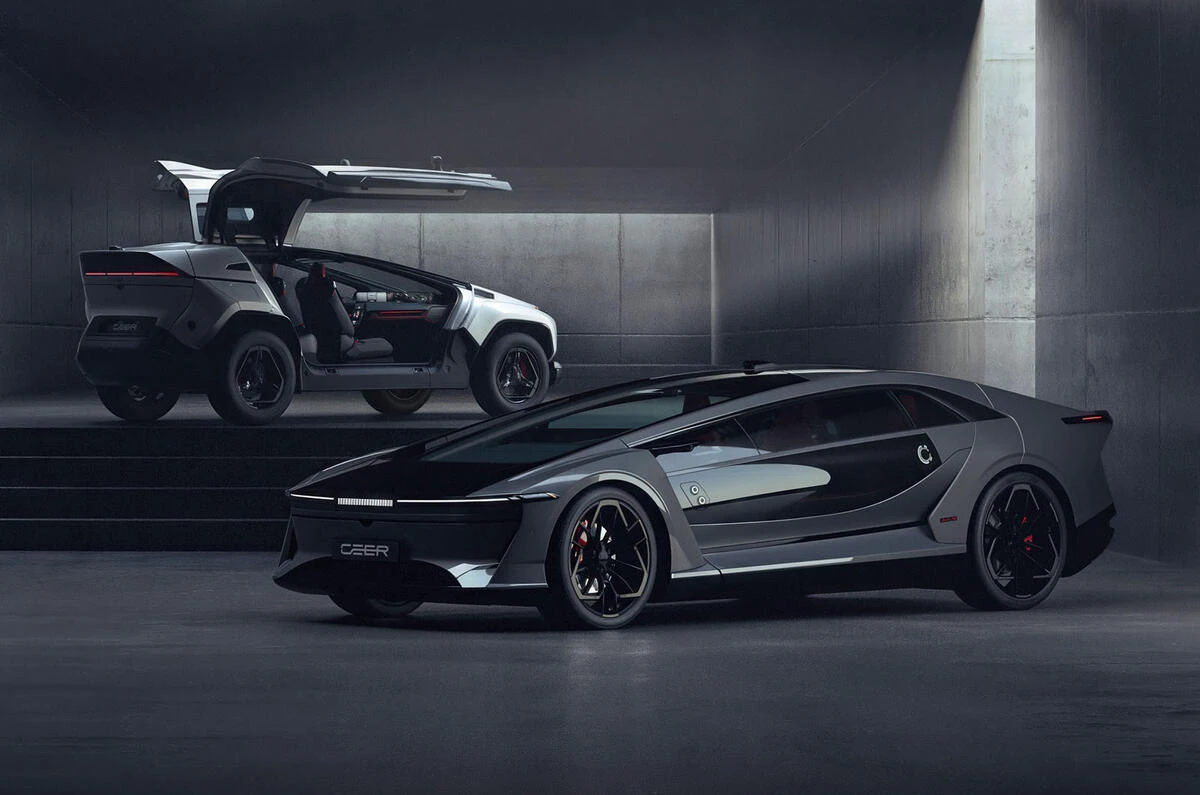
Ceer Automotive, Saudi Arabia’s first car firm, has unveiled its first two models: the Exobot electric sedan and crossover, with an unusual angular design, “gullwing” doors, and a powertrain with more than 1,100 horsepower, Autocar reports.
The company plans to start mass production of these cars in January 2027, with the first deliveries to customers in March.
Ceer was founded in 2022 as a joint venture between Saudi Arabia’s Public Investment Fund (PIF) and Taiwanese contract manufacturer Foxconn.
It was created as part of the Saudi government’s Vision 2030 plan to diversify the kingdom’s economy away from dependency on oil and is intended to “ignite” automotive manufacturing in the country.
These cars will be manufactured in the territory of King Abdullah Economic City on the west coast of Saudi Arabia. American EV maker Lucid, also now owned by the PIF, is building a factory there.
Ceer's first models will be the Exobot sedan and SUV, which belong to the large E segment. Both cars will have a wedge-shaped body, a large glass roof, and light strips consisting of 32 elements as a reference to 1932, when the unification of Saudi Arabia took place.
These cars, however, will not have the central pillars of the body, and their large doors open upwards. Ceer boss James DeLuca told Autocar that such an unusual design was formed after the company's management set the task for the developers to create something that would be fundamentally different from existing cars.
The cabin is planned to have a central touch screen and physical buttons. Other technologies include steer-by-wire steering, special vibration radiators instead of traditional speakers, and a cabin cooling system. The windshield will have a special silver coating that will reflect solar heat.
The crossover is being developed taking into account operation in desert conditions and should have considerable off-road capabilities. The top versions of the Exobot will be able to develop more than 1,100 horsepower and accelerate from zero to 100 km/h in about 2.1 seconds. Launch control systems and a controlled skid mode are also planned.
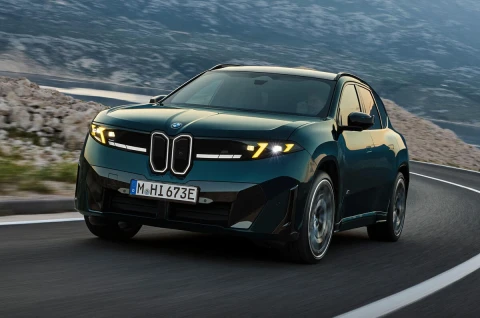
Ceer is collaborating with a number of international companies during the making of these cars. Foxconn is developing the platform and electrical architecture, BMW is participating in technological cooperation, the Croatian Rimac company will supply the rear electric engine, and Hyundai Transys will supply the front engines.
The first of these cars will be sold in Saudi Arabia and other Gulf countries. Ceer plans to gradually expand the model range with five more cars: a D-segment sedan, crossover, and coupe-crossover should appear in 2027, and more compact models in 2028.
According to DeLuca, the next models will be technically ready for certification in global markets, although for now Ceer’s business plan is mainly aimed at Saudi Arabia and countries in the region.
At the same time, the company does not rule out abandoning exclusively electric powertrains in the future. Ceer’s platform enables the use of different types of power units, so plug-in hybrids or cars with an extended range may appear in the markets, depending on the situation.
Currently, the company employs about 2,300 people, 46% of whom are Saudi citizens. Ceer plans to increase the share of local production to 45% by 2034 and announces plans to create around 30,000 direct and indirect jobs.