make preferable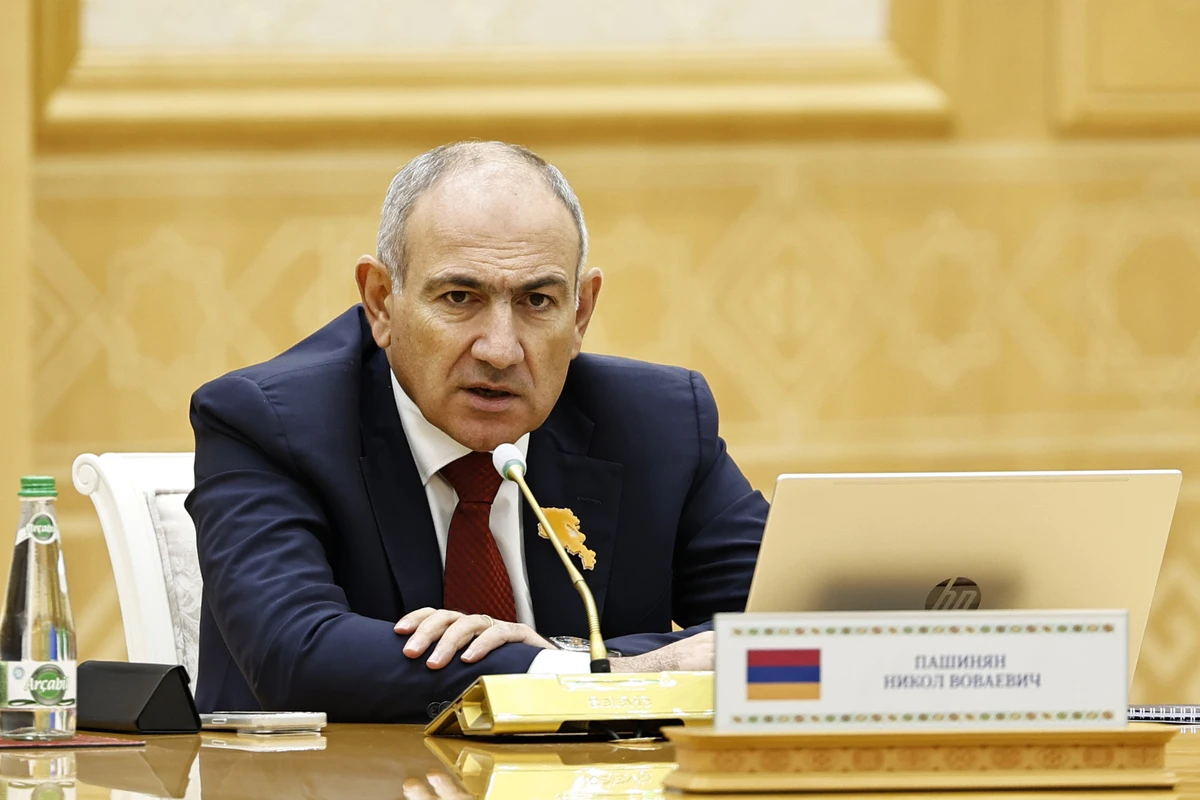
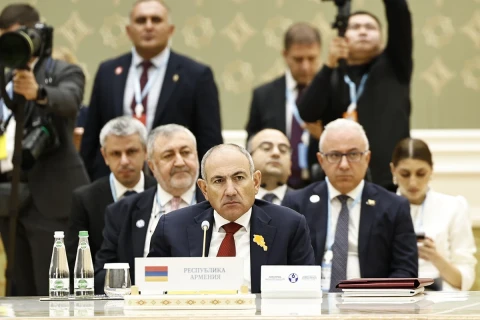
One of the fundamental documents of the Commonwealth of Independent States (CIS) is the Alma-Ata Declaration of December 21, 1991. In this document, eleven Soviet republics, recognizing and respecting each other's territorial integrity and the inviolability of existing borders, recorded the termination of the existence of the Union of Soviet Socialist Republics. Armenian Prime Minister Nikol Pashinyan on Friday stated this in his address at the regular meeting of the Council of Heads of State of CIS, in Turkmenistan.
“The Alma-Ata Declaration played a key role in establishing peace between the Republic of Armenia and the Republic of Azerbaijan,” he added.
“In 2024, Armenia and Azerbaijan signed and ratified the regulation on the joint activities of the commissions on the delimitation of the state border between the Republic of Armenia and the Republic of Azerbaijan. This regulation became the first legally binding document signed between independent Armenia and independent Azerbaijan. And this document stipulates that the relevant commissions of Armenia and Azerbaijan will adopt the Alma-Ata Declaration as the fundamental basis in the process of delimiting the state borders of the Republic of Armenia and the Republic of Azerbaijan,” the Armenian premier stated.
“The CIS fundamental document also occupies a key place in the initialed text of the agreement on the establishment of peace and interstate relations between the Republic of Armenia and the Republic of Azerbaijan,” Pashinyan said.
“The preamble to the document mentions the Alma-Ata Declaration, and the first article says: ‘Confirming that the borders of the former Soviet Socialist Republics of the USSR have become the international borders of the respective independent states and are recognized as such by the international community, the Parties recognize and respect each other's sovereignty, territorial integrity, inviolability of international borders, and political independence,’” he noted.
“And the second article of the same agreement says: ‘In full compliance with Article One, the Parties confirm that they have no territorial claims against each other and will not make any such claims in the future, too. The Parties will not take any action, including planning, preparing, encouraging or supporting such actions aimed at the fragmentation or violation, in whole or in part, of the territorial integrity or political unity of the other Party,’” the Armenian PM added.
“The agreement containing the abovementioned articles was initialed on August 8, 2025, during a peace summit organized by US President Donald Trump at the White House,” Pashinyan said.
“After the [Nagorno-Karabakh] war of 2020, we have come a long way towards peace. In this context, I would like to emphasize the role of Russian Federation President Vladimir Putin in achieving a ceasefire in November 2020,” he noted.
“However, even after the signing of the November 9, 2020 statement, unfortunately, we have not been able to achieve peace in practice. It was obvious that there is only one real option for achieving peace between Armenia and Azerbaijan: the architecture built on the principles of the Alma-Ata agreement,” Pashinyan stated.
“It must be recognized that the adoption of the Alma-Ata Declaration in 1991 did not prevent the escalation of the conflict on the border of Armenia and Azerbaijan. For more than 30 years, the conflict has continued under the conditions of the existence of the Alma-Ata Declaration, and, as it were, its existence was not noticeable,” Pashinyan said.
“To establish complete peace, figuratively speaking, it was necessary to transform the Alma-Ata Declaration, which we did with the president of Azerbaijan on October 6, 2022—as a result of the quadrilateral meeting held in Prague at the initiative of French President Emmanuel Macron and [then] European Council President Charles Michel,” the prime minister of Armenia stated.