make preferable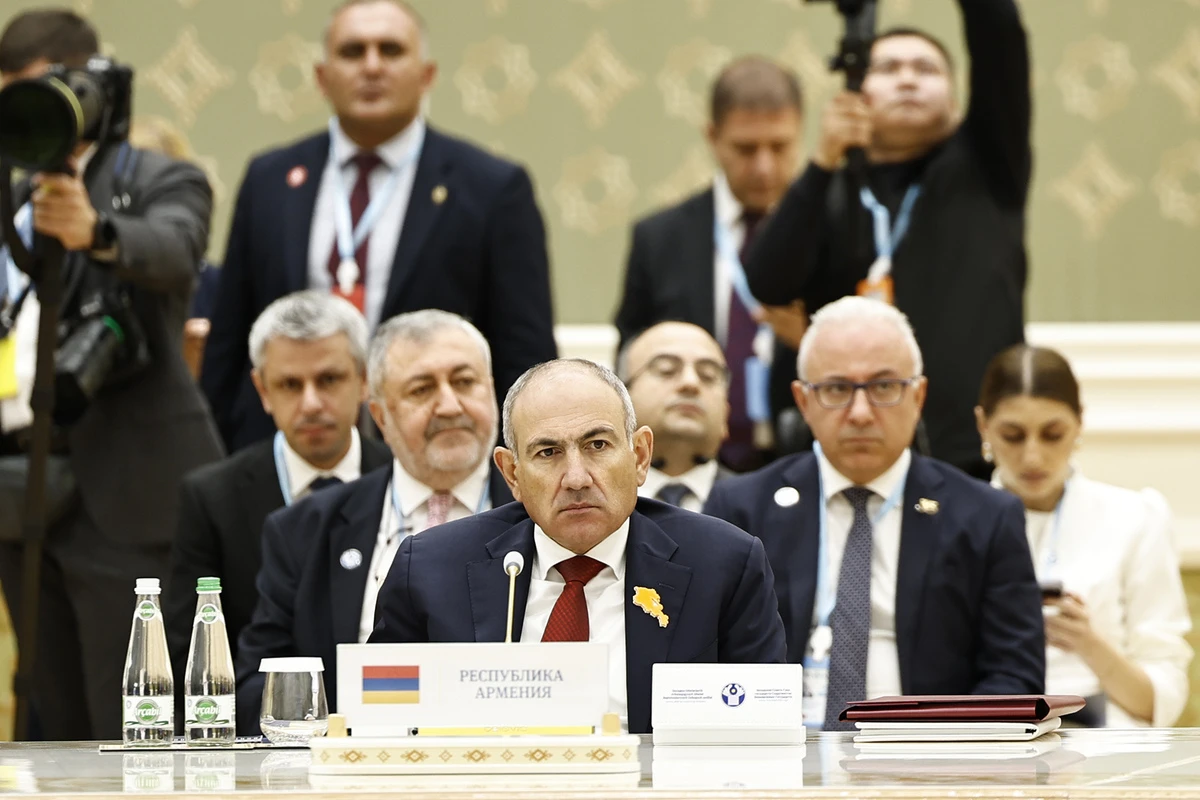
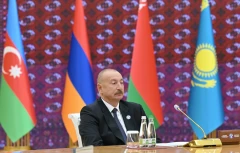
The established peace between Armenia and Azerbaijan is not perfect, and it is obvious that there are humanitarian issues that are still waiting to be resolved. Armenian Prime Minister Nikol Pashinyan on Friday stated this in his address at the regular meeting of the Council of Heads of State of the Commonwealth of Independent States (CIS), in Turkmenistan.
“I mean the issues related to finding out the fate of missing persons, demining, and persons in custody,” he added.
Unfortunately, sometimes there are exacerbations of negative moods in both Armenia and Azerbaijan, including at the official level. However, these phenomena, even if they raise questions, no longer call into question the fact of the existence of stable peace,” Pashinyan stated.
“It is simply necessary to understand that the conflict that has lasted for more than 30 years cannot be turned off in an instant with one flick of a switch. This will take time and consistency,” he said.
“There have been many casualties, suffering, hostility, disputes, and the belief that after so many years of conflict, peaceful coexistence between Armenia and Azerbaijan is no longer possible,” the Armenian premier noted.
“If we look at the issue from this perspective, then with the support of the president of Azerbaijan and our international partners, we have achieved the impossible, and we need to take care of the achieved peace every day, to preserve it, because this achievement serves first of all the peoples of Armenia and Azerbaijan, the strengthening of the independence of Armenia and Azerbaijan, the future generations of Armenia and Azerbaijan, who have received a historic opportunity not only for peaceful coexistence, but also for cooperation and good neighborliness—based on shared interests,” Pashinyan stated.
“It was the Alma-Ata Declaration [of 1991] and its revival that created that historic opportunity, or rather, the historical reality, and we simply need to rely on that reality, looking to the future, where the [two] parties recognize and respect—without reservations—each other’s sovereignty, territorial integrity, inviolability of international borders and political independence, and the parties do not have any overt or covert territorial claims to each other today and forever,” he noted.
“Dear [CIS] heads of state, this is exactly the strategy that the Republic of Armenia has chosen. And it is very important to emphasize that in the Washington Declaration, we recognized the need to continue efforts aimed at the signing and final ratification of a peace treaty between Armenia and Azerbaijan, and emphasized the importance of preserving and strengthening peace between our two countries,” the Armenian premier stated.
“We are moving forward on this path, and I hope and am confident that by collaborating together, we will achieve our ultimate goal: the signing and ratification of the peace treaty between the Republic of Armenia and the Republic of Azerbaijan,” Nikol Pashinyan concluded.