make preferable
The global financial system continues to channel more resources into activities that destroy nature than into its conservation. To halt biodiversity loss, it is necessary to change that approach, reform harmful subsidies, and accelerate the implementation of international commitments.
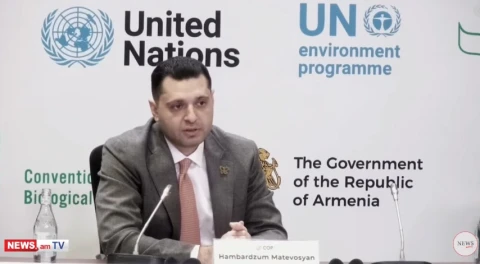
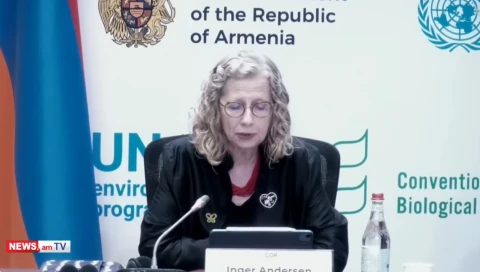
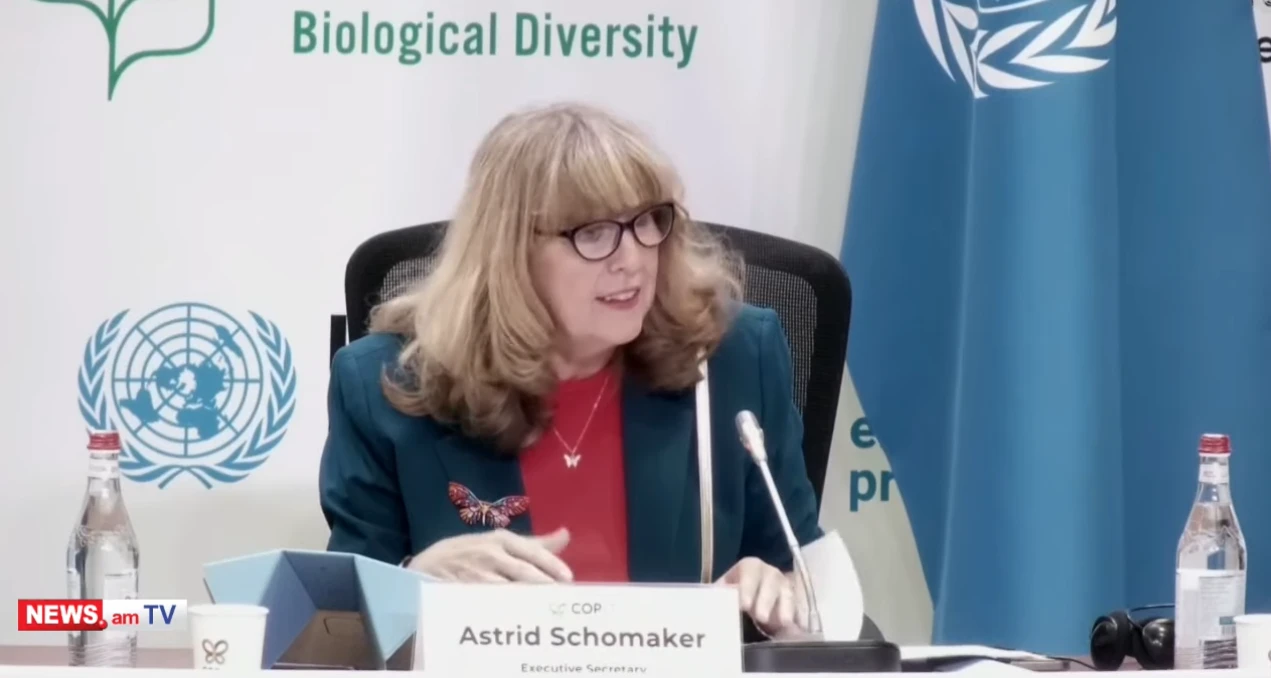
Astrid Schomaker, Executive Secretary of the UN Convention on Biological Diversity (CBD), stated this on Monday during a press conference in Yerevan, on the sidelines of the 17th meeting of the Conference of the Parties (COP17) to the CBD, being held in the Armenian capital.
In her opinion, the second week of COP17 should become a stage for moving from discussing commitments to more active actions. Schomaker identified three main areas of work: accountability, aligning national policies with international goals, and accelerating practical steps.
There is a need to move from a situation where one acts against nature and spends more money on its destruction than on its salvation, to a financial and economic system that is consistent with living in harmony with nature, Schomaker emphasized.
She considered “harmful” subsidies that harm nature to be one of the main problems. In her opinion, it is necessary to review state support mechanisms and redirect funding to measures that contribute to the preservation of biodiversity. She thanked the COP17 presidency for its efforts to unite countries around the reform of harmful subsidies and the expansion of positive incentives.
In this context, Schomaker mentioned the “Friends of Target 18” initiative, which is associated with promoting appropriate changes. It is not only about increasing environmental spending, but also about restructuring financial and economic mechanisms so that they do not encourage the destruction of ecosystems. Schomaker noted progress in implementing the Kunming-Montreal Global Biodiversity Framework.
According to her, 70% of the participants in the CBD have submitted national reports, and 90% have adapted the global biodiversity targets to national conditions. She assessed these indicators as evidence of the readiness of countries to work within the framework of an agreed international system.
However, the head of the CBD emphasized that reporting alone is not enough, and it is necessary to eliminate the causes of biodiversity loss, not just respond to its consequences. Schomaker considered accelerating action as another priority.
According to her, the approach of 2030 requires states to fulfill their commitments more promptly. Among the issues that need additional attention, she singled out targets 13 and 23 of the global framework, gender equality, and the participation of women, indigenous peoples, youth, and local communities.
Also, she stressed the importance of biodiversity education so that young people understand from an early age the importance of living in harmony with nature. In addition, Schomaker mentioned the need for a fair distribution of the benefits derived from the use of biodiversity and the need to assess the risks associated with living modified organisms.
The biodiversity crisis is deep, and the numbers send a very serious signal. Financial action must be accelerated, but it is crucial to understand that by uniting, one can achieve change. Everyone can actively participate in preventing biodiversity loss, she concluded.