make preferable
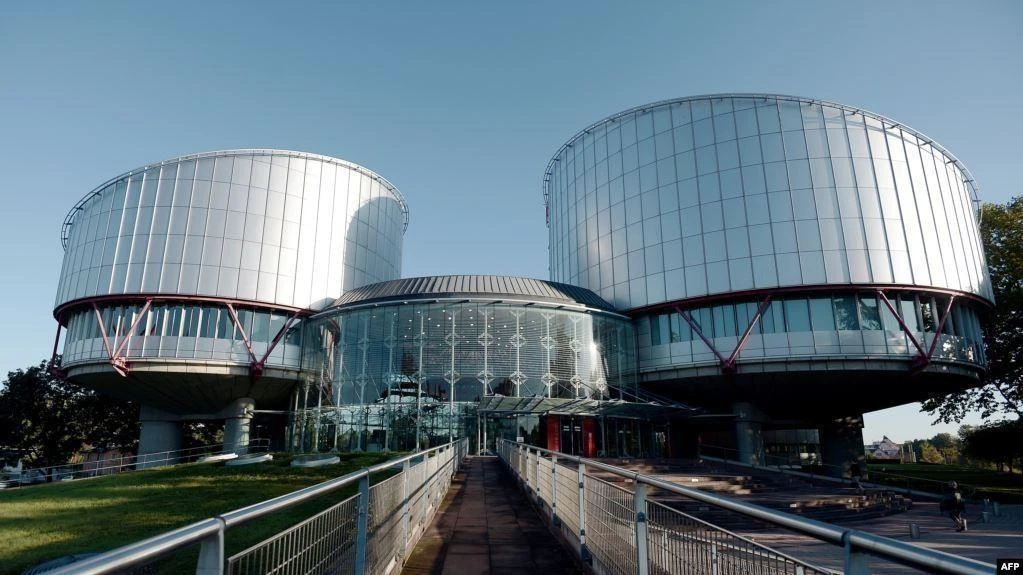
The judgment of the European Court of Human Rights establishing Azerbaijan’s responsibility for the torture and killing of an Armenian serviceman has become final.
The legal team representing the applicants issued the following statement:
“The judgment of the European Court of Human Rights establishing Azerbaijan’s responsibility for the torture and killing of an Armenian serviceman has become final. Azerbaijan’s diplomatic protests and its attempt to secure referral of the case to the Grand Chamber have been unsuccessful.
In our assessment, this outcome provides an important legal foundation for protecting victims of armed conflict and their families.
On 2 November 2026, a panel of five judges of the Grand Chamber rejected the Azerbaijani Government’s request to refer the case of V. T. and Others v. Azerbaijan to the Grand Chamber. Consequently, the Court’s judgment of 18 June 2026 has become final and binding. The applicants, the serviceman’s parents and sister, lodged their application with the Court on 13 April 2016. They were represented by a legal team comprising Ara Ghazaryan, Haykuhi Harutyunyan, Araks Melkonyan, Artak Zeynalyan, Hasmik Harutyunyan and Siranush Sahakyan.
The torture and killing of a wounded and defenceless serviceman cannot be justified by war. The Court established Azerbaijan’s responsibility and also recognised violations of the family members’ own rights. Azerbaijan’s denials and its request for referral to the Grand Chamber have not changed that outcome.
During the April 2016 war, Major H. T.’s military vehicle came under attack by an Azerbaijani sabotage unit near Talish. He was wounded and could no longer move independently or defend himself. The Court established that, while he was in that condition, Azerbaijani servicemen tortured him and killed him by beheading. It found violations of the right to life guaranteed by Article 2 of the Convention and the prohibition of torture under Article 3.
The Court also assessed the family’s suffering separately. The brutal killing of their loved one, the mutilation of his body, and their inability to recover the missing body parts and arrange a proper burial caused his parents and sister severe and continuing mental suffering. In these circumstances, the Court found that they too had suffered a violation of their rights through degrading treatment prohibited by Article 3 of the Convention.
Azerbaijan sought to deny its servicemen’s involvement and disclaim responsibility by invoking its lack of control over the territory. The Court established that the serviceman had been under the de facto authority and control of Azerbaijani forces. Azerbaijan’s account was also contradicted by its own official statements and publicly released video footage. The Court further rejected the objection that the family should first have applied to the Azerbaijani authorities. Taking account of the practical and systemic obstacles facing Armenian applicants, it found that Azerbaijan did not provide any effective legal remedy for ethnic Armenians.
Following the judgment’s publication, Azerbaijan also expressed its dissatisfaction through diplomatic channels. On 22 June 2026, the Head of the Council of Europe Office in Baku was summoned to Azerbaijan’s Ministry of Foreign Affairs. The Azerbaijani side described the judgment as unfair and biased, objecting in particular to the use of the name ‘Nagorno-Karabakh Republic’ and references to its institutions. Neither Azerbaijan’s objections nor its attempt to secure referral to the Grand Chamber has altered the final and fair outcome of the case.
The Committee of Ministers of the Council of Europe will supervise the execution of the final judgment.
We also wish to inform the public that our legal team has lodged applications with the European Court of Human Rights concerning other war crimes committed during the four-day war of 2016. We expect further rulings in those cases.”