make preferable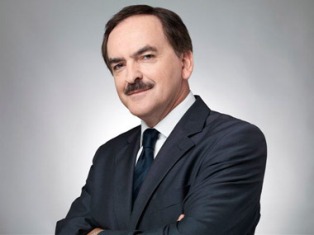
By Anna Ghazaryan
YEREVAN.- Armenian News - NEWS.am continues a series of interviews with diplomats working in Armenia. This time our interlocutor is Polish Ambassador to Armenia Zdzislaw Raczynski. He spoke about his vision of diplomacy, the things he is missing Armenia and Christmas traditions in his country.
Which are character traits the diplomat must have? Can a person become a diplomat or must he have certain characteristics?
In the past, diplomacy was a profession that was inherited, profession for people of a certain social circle. First of all, the profession demands respect for the other people and the ability to empathize. The poor lived in difficult conditions thus it was difficult to develop these qualities. Now we live in a democratic world, with equal opportunities. So diplomacy has become more accessible, but the very nature of the profession has not changed. There is a widespread belief that the diplomat is a person who lies for the benefit of his country. It is not so. Nowadays, diplomat’s main task is to convey his country’s view to the government and society of the country he is working in. Then, he must understand what is happening in this country and transfer information to his government. There is a lot of information, so the ambassador’s task is to analyze and collect the most useful information.
Mass media and the politicians themselves are using such terms as “soft” or “tough” diplomacy. Do you think that in diplomacy, the end justifies the means?
No, because the goals may change. A person is behind adoption of certain measures. What will happen with him when the target is changed? A person can not be an instrument of something, a person himself is the goal. As for foreign policy, it is not realized only by diplomatic means, there are economic and military measures. It can be done in different ways. The essence of European politics is finding a compromise. It is impossible to agree on something if there are different opinions. You need to exchange views and find the point at which you can meet. History has taught Europe that military means lead to regress. Another thing is that a compromise is within certain limits, it is necessary to comply with the rules. It is impossible to reach a compromise with a dictator who is killing, for example, 10 people a day. You can not come to a point that he can kill only 5. In this case, a tough policy is justified.
There are questions that you do not like to answer?
Those related to my personal life. “My home is my castle” as the English saying goes. It is one of the features of European culture. A person has the right of having his personal space, neither the husband nor the lover, daughter have the right to break it. Protecting your space, you also take over a commitment not to interfere with someone else’s life.
What are you missing being out of Poland?
I miss bookstores. On Saturday I love to walk in the streets, seat in calm cafes, chat with friends or buy something. Warsaw is very friendly. There is a lot of green space in the city. I miss the green. Poland is a flat country. In Armenia you live surrounded by mountains, you look into the distance and you can not move eyes on. Our plains stretch for miles. Everyone loves the place where he was born and where he grew up.
What do you do at Christmas? Do you have any family traditions?
The biggest holiday of the year we have is a Christmas Eve, December 24. On this day, all the family members try to get to the parents. All sit down at the table, as soon as the first star appears in the sky. Table must be covered with a white cloth. Straw is put under the tablecloth.
There must be 12 lenten dishes. You must put an extra set for those who are alone this evening. Any person, if he is alone, can enter and enjoy the meal. The supper begins with breaking of oplatek, a Christmas wafer. A traditional meal includes fish, a beetroot soup with small ravioli with mushroom filling. Then, family members sing Christmas songs, give presents and then go to a church for service.
You can also read in this series interviews with the ambassadors of Britain and France and Italy.