make preferable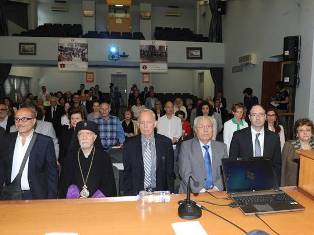
An international symposium entitled “Rebuilding the memorial dialogue: Turkish-Armenian example” was held at the Saint-Joseph University (USJ) in Beirut at the initiative of the Boghossian Foundation, Lebanese L’Orient-Le Jour reports.
The symposium was attended by the Catholicos of the Armenian Catholics Patriarch Nerses Bedros XIX, speakers from Europe, Lebanon and Turkey. The participants discussed the possibility of a dialogue between Armenia and Turkey. It was stressed that for Armenians, any reconciliation process begins with the recognition of the Armenian Genocide by Turkey. At the same time, the Turks have a nostalgia of politico-religious and social system of Ottoman Empire, where Muslims were ruling all the processes, added participants.
“The Turkish community lives trauma of the loss of the Ottoman Empire,” university lecturer Ahmet Insel said.
This obsession with the past is the basis of a violence that could explode at any time, Ahmet Insel added, stressing that this violence is linked to a fear based on several denials.
In this sense, the condolences expressed on the eve of April 24 by Turkish Prime Minister Erdogan to the grandchildren of the Armenians, “also refer to a shared grief and describe the end of the Ottoman Empire as a difficult period for millions of Ottoman citizens,” Christine Babikian Assaf, the Dean of the USJ Faculty of Arts, argued. She had compiled a chronology of the transformation that began in 1945 when the Armenian Diaspora raised claims for the first time in a letter to the UN to put pressure on Turkey through international bodies. Armenians have expanded their scope from the commemoration of the fiftieth anniversary of the genocide in 1965, and after the birth of the new Armenian state in 1991, successive Armenian presidents have continued the same direction and have placed the issue of Genocide recognition among the priorities of the agenda of foreign policy.
Speaking about the prospects of reconciliation, Ahmet Insel emphasized the importance of redefining the Turkish citizen identity. We must explain the citizens of Turkey that the responsibility for Genocide is on state officials who were directly involved in it, and today as these criminals are no longer alive and cannot appear in court, we should at least not consider them as heroes, and we should rename schools and streets that bear their names, added Ahmet Insel. According to him, the issue relates not that much to the forgiveness, although it is necessary to live together, but to the recognition of facts; while forgiveness is individual, the recognition is collective.