make preferable

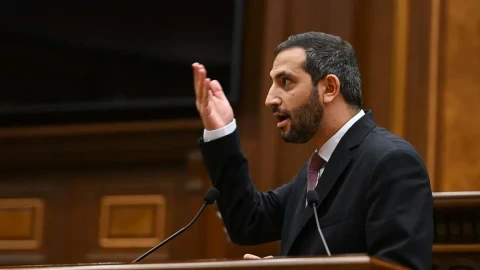
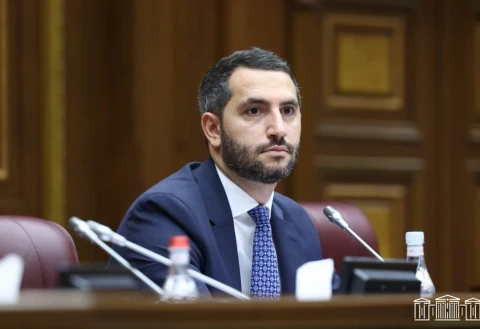
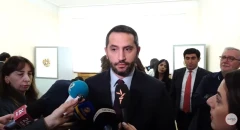
The matter of changing Armenia’s constitution stems from the internal, not the external agenda. At the same time, Azerbaijan declares that it will not sign the peace agreement until a new constitution is adopted in Armenia. Speaker of the National Assembly (NA) of Armenia, Ruben Rubinyan, on Tuesday told this to reporters.
Rubinyan noted that Armenia does not accept this approach of Azerbaijan, considering that there are no obstacles to signing the peace agreement.
“But there are realities. The Armenian foreign minister spoke about [the fact] that there is no demand, but there is a condition [by Azerbaijan],” he noted.
According to Rubinyan, a demand differs from a condition in that the former implies a call to take this or that step.
“We [i.e. Armenia] want to adopt a new constitution within the framework of the internal agenda, and we want to sign the peace agreement, but Azerbaijan has expressed its readiness to sign it in the event of the adoption of the new constitution of Armenia,” he recalled, claiming that the adoption of the new constitution of Armenia stems from the internal agenda of the Armenian authorities.
In his assessment, the new constitution of Armenia will meet today’s realities, and, “separately from that,” “we will be able to achieve the signing and ratification of the peace agreement.”
Separately, Rubinyan reaffirmed that there are no obstacles to reopening the border and establishing diplomatic relations between Armenia and Turkey as soon as possible. He expressed Yerevan’s readiness in that regard and added that the rest depends on Ankara. According to him, the process of normalizing Armenian-Turkish relations continues as border checkpoints on both sides have been restored and are ready for operation, and Turkey has begun the renovation of the Kars-Gyumri railway.
The speaker of the Armenian NA added that he also sees no obstacles to the normalization of relations between Armenia and Azerbaijan.
“The normalization of relations with Turkey and Azerbaijan is inevitable and is in progress. With Azerbaijan, this is no longer a peace process, but a normalization process. At the same time, there are still unresolved issues: border delimitation, full lifting of the blockade, signing of the peace agreement," Ruben Rubinyan concluded.