make preferable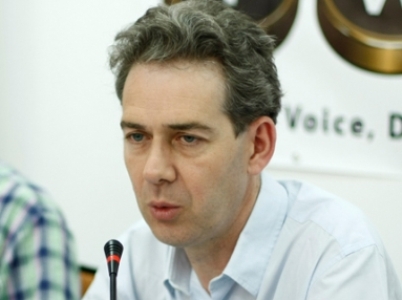
YEREVAN. – If we exclude the tragic moments, Armenia and Azerbaijan have mutual interests to work for a shared future. British analyst Thomas de Waal, a senior associate at the Washington-based Carnegie Endowment, specializing primarily in the South Caucasus region, told the aforesaid at a press conference on Monday.
In De Waal’s words, even though all the formal attributes exist for the negotiation process of the Nagorno-Karabakh conflict, on the whole, this process does not move forward in the sense that the parties to the conflict do not discuss real things.
“I don’t see a real discussion of strategic issues. Strategically, it’s important for Azerbaijan to be freer from the Russian and the Iranian influence.
“And from the Armenian perspective, the most important strategic issue is the country’s development, the opening of its borders.
“In this context, a mutually beneficial cooperation can be achieved. But we all realize that this is unrealistic in the current situation,” the analyst noted.
Reflecting on the present-day situation and the recent escalation of tension on the Armenian-Azerbaijani Line of Contact, Thomas de Waal stressed:
“It’s very sad to note that youth are killed who were born after the ceasefire was signed [in 1994]. This is the price of the hostile rhetoric which comes primarily from Azerbaijan. The parties need to realize that this is not a game.”