Preferred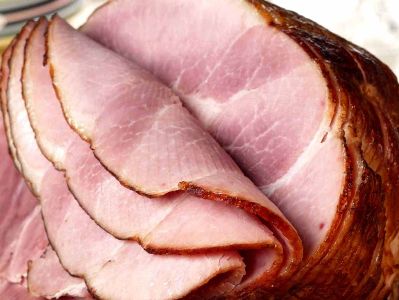
Yerevan, in terms of average monthly salary, is giving way to Syunik region only (according to the recent data by about 10% ). However, the capital city has a high concentration of highly paid officials, employees of numerous companies with foreign capital ( whose wages are higher than in companies with local capital ) , and a lot of entrepreneurs.
It necessary to consider, that for some citizens the salary they receive is not the only source of their income. They also have a "left income” , which can be incomparably higher than their official salary . This fact is not taken into consideration by the official statistics but rather manifested in the form of additional " solvency " of the population . No doubt, that the capital city in this regard is a total leader.
There are some interesting facts reflected in prices. Compare, for example, the cost of meat and meat products for August of this year. We have calculated the average price in ten provincial cities per each product. In August, beef in Yerevan was more expensive than on average in provincial towns by "only" 6%. The difference is more obvious, while comparing pork (12% more), chicken legs (almost 29%), and beef fillet (32%). Of course there are exceptions, though very rare. For example, ham in Yerevan is cheaper by 10% than it is on average in provinces.
The commodity market in Yerevan terms of capacity is absolutely incomparable with provincial markets. One third of the population of Armenia lives in Yerevan, but it accounts for over 70% of retail trade turnover. It is clear, that residents of neighboring settlements also use retail products of Yerevan, thus increasing the number of buyers, to the benefit of the capital city. At the same time, taking onto consideration the official data on retail turnover per capita, the sales in provinces are evidently not that active. This factor (unless, of course, the local commodity market is monopolized, and there is no agreement among sellers) to a certain extent prevents the increase of price.
The capital city is on the other scale of the reality. Supermarkets in Yerevan also cannot inflate the price, let’s say of the same beef. Otherwise, a part of buyers will switch to agricultural markets. However, it is possible to "slightly" increase the price and repeat the "experiment " after a while. Other objects of trade , of course , try to keep up with the "contestant" . Currently, the process of creeping growth of prices has stalled due to unfavorable trends in customers demand.