make preferable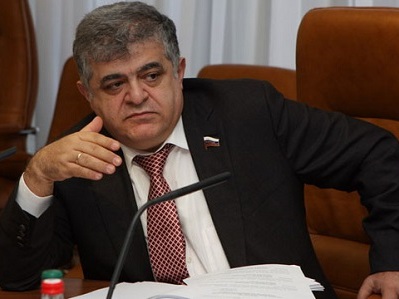
I have counted ten color revolutions in the post-Soviet territory. It all started with the well-known events that took place in Georgia when Shevardnadze was, in essence, removed from the position of head of state and Saakashvili seized power. This is what First Vice-Chairman of the Committee of the Federation Council of the Federal Assembly of the Russian Federation Vladimir Zabarov said during a Moscow-Minsk-Yerevan-Bishkek-Tbilisi teleconference entitled “Velvet Revolutions in the Post-Soviet Territory: Origin and Consequences”.
According to him, this was followed by the first Maidan in Ukraine, the Orange Revolution. “The situation was unique in that period. I believe it was the first time in history when there was a third round of presidential elections. The European Union and the United States clearly interfered, and Yanukovych, who was running for president for the first time, ceded. Afterwards, it was Kyrgyzstan with the Poppy Revolution, which ended with forceful overthrow of government. In Kyrgyzstan, there was a conflict between the rich North and poor South, and the problem continues. After that, there was an attempted color revolution in Uzbekistan, which was repressed by the late Islam Karimov. After this, the Cornflower Revolution took place in Belarus, but was quickly neutralized, even though Europe and the European Court of Human Rights immediately imposed tough sanctions on Belarus. Next was Moldova with its Purple Revolution, and on March 1, 2008, disturbances began in Armenia after Sargsyan won Levon Ter-Petrosyan in the elections. Later, another revolution took place in Kyrgyzstan and was referred to as the Melon Revolution, and, of course, the Euromaidan in Ukraine. I consider this apotheosis,” Zabarov explained.