make preferable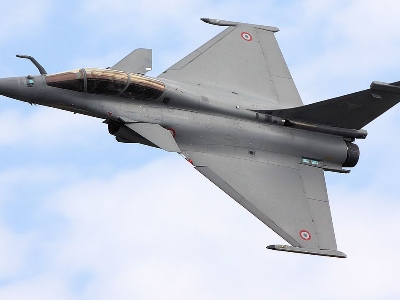
Germany and France are making a new effort to resolve an impasse over the development of a joint fighter jet, Europe’s biggest defence project that has led to tensions between Berlin and Paris, security and industry sources told Reuters on Wednesday.
At an estimated cost of more than 100 billion euros, the venture brings together Germany, France and Spain to forge a future weapons system that is seen as the heart of a deepening European defense cooperation.
Dassault Aviation <AVMD,PA>, Airbus and Indra are supposed to build the aircraft, which is expected to be operational from 2040 with a view to replacing France’s Rafale and Germany’s Eurofighter warplanes over time.
German Chancellor Angela Merkel and French President Emmanuel Macron kicked off the ambitious venture in 2017, when the EU was rattled by Britain’s decision to leave the bloc and deeply divided over other issues such as the migrant crisis.
At the beginning of February, Merkel and Macron failed to settle the issue, thus leaving open when the next tranche of payments of at least 5 billion euros can be released, according to insiders.
On Wednesday, envoys of the defence ministries of Germany, France, Spain as well as from Dassault, Airbus and Indra met in Paris to try to resolve the impasse, security and industry sources told Reuters.
Part of the controversy revolves around intellectual property rights, and who should possess them in the end.
Before moving ahead with the venture, Germany is trying to gain more concessions from France on the issue, insiders said, adding that Berlin would like to be able to use technologies co-developed with Paris for its own projects.
One French source said Germany also aimed for intellectual property developed at national level in France, something a German source denied. A senior French parliamentary figure also expressed doubts about the project’s viability, citing diverging approaches and political constraints, such as Berlin’s refusal to participate in combat operations abroad. “To be honest, it would be a lot easier for us to work with Britain because we share the same military culture,” the MP told Reuters. Britain is running its own fighter jet program, Tempest, with Italy and Sweden.