make preferable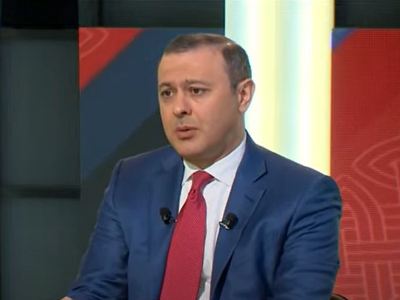
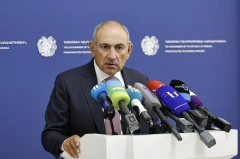
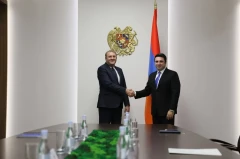
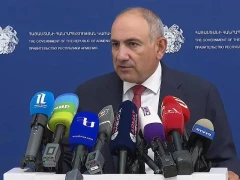
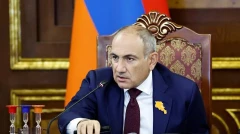
There is a reference to the peace agenda in the 30-point statement adopted as a result of the Pashinyan-Putin meeting. Secretary of the Security Council of Armenia, Armen Grigoryan, stated about this on Public TV, commenting on the program host's remark there is dissatisfaction among the Armenian public that the aforesaid document does not refer to the peace agenda.
"The peace agenda includes the settlement of the Nagorno-Karabakh [(Artsakh)] conflict, there is a clause on the Nagorno-Karabakh conflict; there is also a clause on unblocking. You know that unblocking is part of the peace agenda in a broader context. And in that sense, the normalization of Armenia-Turkey relations is again part of the peace agenda in a broad context. The word/wording ‘peace agenda’ is not noted separately, but the points referred to in the 30-point statement all relate to the peace agenda, too. The willingness to provide support, to move forward with those points is also support for advancing the peace agenda," he said.
The host noted that the document does not mention the urgent need to move forward and now resolve the Nagorno-Karabakh conflict, to which Grigoryan responded by saying that Armenia is working with all its partners to try to advance this agenda.
"Russia is also part of advancing this agenda. You know that Russia has even appointed an official, Mr. Khovaev, who shall take part in advancing the peace agenda. The important thing is that this text should not be looked at separately, this text has subtitles or parts. Referring to the statements of November 9, 2020, January 11 and November 26, 2021 also means making reference to the peace agenda in general. Besides, there are also announcements, positions. And as I mentioned, the appointment of Mr. Khovaev also speaks about the peace agenda. The text is not just the written words, but has a broader context," he said.
The host quoted the aforementioned statement’s point 9, which speaks about the inadmissibility of unilateral restrictions, and noted that this reminds of the sanctions unilaterally imposed on Russia by the West. And when asked whether Armenia is taking on a commitment to overcoming these sanctions together with Russia, the secretary of the Security Council of Armenia responded: "We have not made any reference to it. As for the restrictions, if you look more globally, you know that food security issues have arisen even between Armenia and Russia. Russia's imposition of certain restrictions on food export issues had caused problems. Of course, at this moment we are closer to the solutions; I believe we will have solutions soon. And the reference, which is mainly made in the analytical period, I believe ‘darkens’ the ‘colors,’ as long as there is reality."