make preferable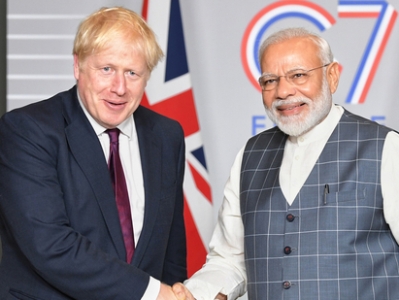
Britain will offer India to intensify defense cooperation, such as helping to build its own fighter jets and faster delivery of defense equipment, Reuters reported.
During his first visit to New Delhi as prime minister, Boris Johnson will discuss with his Indian counterpart Narendra Modi how to develop trade and security ties.
"This is a very auspicious moment in a relationship and friendship between two democracies," Johnson said after Modi briefly welcomed him at the presidential palace ahead of the talks on the final day of a two-day visit.
"I don't think the relationship has ever been as good."
The effort follows last month's attempt by the United States to alienate India from Russia with its own proposal to increase defense and energy sales after President Joe Biden called India somewhat hesitant in its actions against Russia.
Britain hopes its offer of closer security ties with the West will encourage India to distance itself from Russia.
The UK has said it plans to support India's long-standing goal of building its own fighter jets to reduce imports of expensive military equipment. India has Russian, British and French fighters.
The UK will issue a so-called open general export license to India to shorten the delivery time for defense goods. Only the European Union and the United States currently hold such licenses, Johnson's spokesman said.
Offering closer security ties will also lead to more joint military exercises and officer exchanges.
While Britain's offer of closer security cooperation is welcome, India will continue to rely on Russian military hardware, in part because it's cheaper, said Mohan Guruswami, director of the Center for Political Alternatives in New Delhi. “The UK does not offer India everything it wants, and what it offers is usually more expensive,” he said.
Johnson and Modi will also discuss trade as they try to reach an agreement before the 2024 general elections in both countries.
British data show that the UK's trade with India was £23bn ($29.93bn) in 2019, a minuscule amount compared to trade with neighboring Ireland, which has about 4m people.
Any trade deal is likely to depend on easing rules and cutting tuition fees for Indian students and professionals heading to the UK.
Johnson signaled he was willing to be more accommodating on the issue, adding that the UK was facing a massive shortage of hundreds of thousands of workers, especially in sectors such as information technology.