make preferable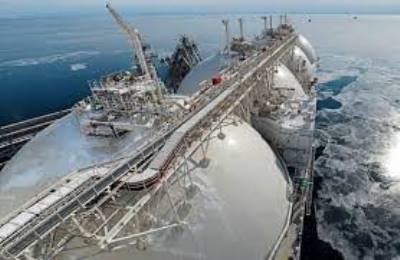
The U.S. has become the world's largest exporter of liquefied natural gas (LNG) in the first half of 2022, according to the U.S. Energy Information Administration.
According to the agency's report, U.S. LNG exports in the first half of 2022 rose 12 percent from the second half of 2021, averaging 11.2 billion cubic feet per day.
"LNG exports continued to grow for three reasons—increased LNG export capacity, increased international natural gas and LNG prices, and increased global demand, particularly in Europe," the paper said.
The Department of Energy estimates that installed U.S. LNG export capacity has increased by 1.9 Bcf/d since November 2021.
"As of July 2022, we estimate that U.S. LNG liquefaction capacity averaged 11.4 Bcf/d, with a shorter-term peak capacity of 13.9 Bcf/d," the report said.
International natural gas and LNG prices hit record highs in the last quarter of 2021 and the first half of 2022. Prices on a virtual trading floor in the Netherlands have traded at record highs since October 2021. In the first half of 2022, the average price on the marketplace was $30.94 per million British thermal units. Spot prices for LNG in Asia were also high, averaging $29.50 per million British thermal units during the same period.
Since late last year, countries in Europe have been importing more LNG to offset declining pipeline imports from Russia and replenish historically low natural gas reserves in storage.
In the first half of 2022, EU and UK LNG imports increased 63% to an average of 14.8 Bcf/d.
Most U.S. LNG exports went to the EU and U.K. during the first five months of the year, accounting for 71%, or 8.2 Bcf/d, of total U.S. LNG exports. As in 2021, the U.S. shipped the most LNG to the EU and the U.K. in the first half of the year, accounting for 47% of the 14.8 Bcf/d of total LNG imports to Europe, followed by Qatar at 15%, Russia at 14% and four African countries combined at 17%.