make preferable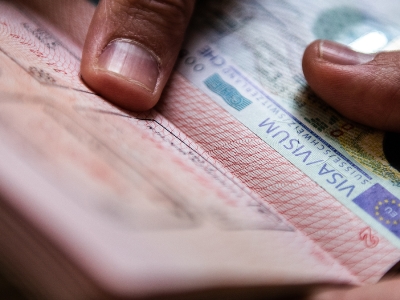
The European Commission proposed to completely suspend the visa facilitation agreement with Russia.
"The EU's visa policy is a mark of trust – a trust that Russia has completely undermined with its unprovoked and unjustified war of aggression against Ukraine. As long as Russia's military aggression towards an EU candidate country lasts, Russian citizens cannot enjoy travel facilitations to Europe. Once again, the EU is showing its unwavering unity in its response to Russia's military aggression," said European Commission Vice President Margaritis Schinas.
This means that Russian citizens will no longer enjoy privileged access to the EU, European Commissioner for Home Affairs Ylva Johansson told reporters. "The EU's visa policy is a mark of trust – a trust that Russia has completely undermined with its unprovoked and unjustified war of aggression against Ukraine."
EU foreign ministers in Prague on Aug. 31 politically supported the suspension of the 2007 agreement on visa facilitation for Russians.
Baltic and Nordic ministers will meet late Tuesday and Wednesday night in Lithuania, where they are expected to discuss a possible agreement to limit entry for Russian visa holders at land crossings.
"We will soon follow up with additional guidelines to ensure enhanced scrutiny on visa applications and border crossings by Russian citizens, without cutting ourselves from Russian dissidents and civil society," Johansson said.
She unveiled the new regime, which is expected to receive swift approval in the capitals of member states in the coming days.
Russians applying for visas to enter the Schengen zone - the 22 EU member states, as well as Norway, Iceland, Switzerland and Lichtenstein - will now pay a fee of 85 euros instead of 35 euros. Standard processing time for such a request will be increased from 10 to 15 days, and in some cases processing will last up to 45 days. Multiple-entry visas will be restricted. From now on, applicants will have to provide a longer list of documentary evidence to support their applications.
"Once again, the EU is showing its unwavering unity in its response to Russia's military aggression. We will soon follow up with additional guidelines to ensure enhanced scrutiny on visa applications and border crossings by Russian citizens," she said. Johansson added that the decision could come into force as early as September 12.