make preferable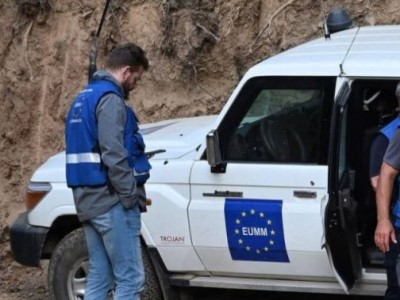
The EU monitoring mission in Armenia began its work on Thursday. The measure follows the EU's decision to deploy monitoring experts along the Armenian side of the international border with Azerbaijan, EU External Action Service reported, providing some details related to the mission.
The mission will perform two main tasks:
1) to support confidence building between Armenia and Azerbaijan by monitoring both sides' compliance with the ceasefire;
2) Through regular and ad hoc reporting on the martial law and ceasefire developments on the ground, the EU team will monitor the situation in the border areas between Armenia and Azerbaijan. This will enable the EU to better support the work of the border commissions of the two sides.
The area of responsibility of the mission will be the Armenian side of the internationally recognized border between Armenia and Azerbaijan.
Only civilian observers will be deployed. The mission is composed of up to 40 EU civilian monitoring experts, who will be deployed over a period of two months.
Regarding the role of the technical assessment mission, which arrived in Armenia on October 14, it is reported that the EU technical assessment mission of experts in Armenia intended to prepare the ground for the deployment of the EU monitoring mission in the country. Its role was to gather the necessary information, conduct on-site assessments, and liaise with relevant stakeholders.
To ensure the rapid deployment of the EU mission, EU monitoring experts from the EU monitoring mission in Georgia (EUMM in Georgia) were deployed.
The monitoring mission in Armenia will report on martial law and ceasefire developments in the border areas between Armenia and Azerbaijan. This will enable the EU to better support the work of the border commissions of the two sides. EU experts will also observe developments along the bilateral border, including human rights situations. They will not have an investigative role.
As to whether the EU mission will draw conclusions about which side started the escalation on September 13 and make recommendations about steps to be taken to prevent future escalation, it is noted that the mission will report to the relevant EU institutions and services about its observations along the bilateral border. It will not assume an arbitrary role or draw political conclusions from its observations.
It is noted that the EU mission and the OSCE assessment mission are two separate missions with two different mandates. The EU mission will liaise with all relevant international organizations, including the OSCE. There is no overlap between the EU mission and the OSCE effort.