make preferable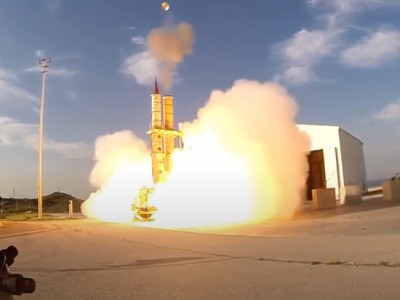
Israel was concerned about hypersonic missiles in the region long before Iran announced that it had developed such weapons and was working with the U.S. Missile Defense Agency to counter any such threats, the Jerusalem Post reported.
“Hypersonic missiles are not yet a threat in the region but they are a big concern,” one senior officer in the IDF’s Air Defense Array said in September.
The Israel Missile Defense Organization (IMDO) and the U.S. Missile Defense Agency (MDA) are key partners in numerous air defense projects. Washington and Israel have also signed an agreement under which the U.S. will come to Israel's aid with missile defense in times of war, and the two armies have conducted numerous joint air defense operations in recent years.
Although Israel has a multi-layered air defense system that includes the Iron Dome, Arrow-2, Arrow-3, David's Prasch, and the Iron Beam laser system still in development, there is still no system capable of intercepting hypersonic missiles.
Because of the emerging threat, MDA requested $225 million for hypersonic missile defense in its fiscal year 2023 budget request.
MDA is also working on developing interceptor missiles to defeat enemy hypersonic missiles with another hypersonic missile known as the Glide Phase Interceptor (GPI). GPI will disable an enemy missile during the planning phase of its flight when it is most vulnerable.
It is also working on a space-based system to destroy enemy missiles that are difficult to track, such as hypersonic missiles. The program will have a multi-layered system that combines satellite sensors, ground-based radars, and more to detect, track and intercept hypersonic missiles.
Israel is also working to increase its presence in space with a constellation of satellites that can track hostile targets.
Hypersonic missiles pose a new threat because they fly five times faster than the speed of sound and have complex and varied flight paths, making them difficult to intercept. They also fly much higher than subsonic missiles, but much lower than intercontinental ballistic missiles, in an area where many countries, including the United States, lack adequate tracking cover. These missiles can also carry nuclear warheads, making the threat even more alarming.
Especially after Iran announced Thursday that it has developed a hypersonic missile capable of penetrating any anti-missile shield.