make preferable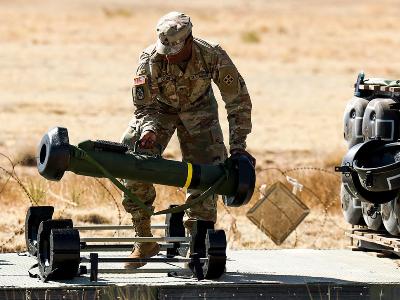
Desperate to meet Ukraine's military needs, the Pentagon is looking for ways to speed up assembly lines and lure weapons manufacturers with long-term contracts, Bloomberg writes.
It has also led to more serious questions about the U.S. ability to supply itself and its allies for war. As Ukraine continues to push for more and better weapons, the U.S. must face the risk that its own stockpiles of some ground weapons will be depleted if it suddenly needs to defend itself, help Taiwan defend itself against China or confront North Korea.
While the U.S. is focusing money and production on stealth fighters, artificial intelligence goggles and hypersonic weapons, Ukraine needs artillery shells, tanks and shoulder-launched missiles to repel Russian ground attacks.
"This is a very serious challenge, both for NATO allies that are giving serious commitment, significant military assistance, lethal assistance, to the Ukrainian military forces, but it is a significant challenge for the Ukrainian military forces themselves that are facing shortfalls and declining stockpiles," Julianne Smith, the U.S. permanent representative to NATO, said earlier.
The numbers are staggering. As of Dec. 9, the U.S. had transferred more than 1 million 155-mm artillery shells, 180,000 105-mm artillery shells, more than 8,500 Javelin anti-tank missiles, 4,200 high-precision 155-mm Excalibur artillery shells and 1,600 Stinger portable missiles to Ukraine.
Just as the coronavirus pandemic exposed shortages in the supply of everything from microchips to kitchen cabinets, the war in Ukraine and the needs of its armed forces showed just how vulnerable the Pentagon has become to supply shortages.
One example: the NASAMS National Advanced Air Defense Systems, which Ukraine covets. In November, the Pentagon accelerated the delivery of the first two NASAMS to Ukraine, coordinating with partners and allies to use components from existing stocks. This allowed $182 million for these first two systems on Aug. 26.
The $1.2 billion contract, awarded Nov. 30, was also accelerated, allowing Raytheon Technologies Corporation to begin work on producing six more systems for Ukraine over the next few years.
Another example is HIMARS, a mobile missile system that the Pentagon has purchased in limited numbers in recent years. The U.S. has transferred 38 highly mobile artillery rocket systems to Ukraine, a small fraction of the 460 launchers in service with the Army and Marine Corps. Lockheed Martin Corp. has produced at least 540.
Lockheed has moved to increase production in anticipation of the Pentagon's formal request, aiming to produce 96 systems annually, according to Chief Executive Officer Jim Teiclet. That's double the number from the beginning of 2022.
Regardless of what happens with Ukraine or Taiwan, some officials believe the U.S. stockpile of critical munitions is too small anyway. “We all would like to have greater stockpiles than we had in the last several years," Army Secretary Christine Wormuth said.
While the exact levels of specific munitions tend to be classified, a consensus is emerging that the stockpile should increase significantly
Ukraine's insatiable need for more exposes gaps. The surge in weapons production caused by the wars in Iraq and Afghanistan has been curtailed as the fighting has waned. Raytheon stopped producing Stinger missiles in 2020.
Now the U.S. is trying to recover by encouraging companies like Raytheon and Lockheed to restart production lines.
Behind it all is a clumsy, painfully slow procurement process, thanks in part to legislative and regulatory safeguards preventing unfair pricing.
"The problem is a tension in the system" said Mark Cancian, a former White House defense budget auditor who now works at the Center for Strategic and International Studies. "Military planners want to refill depleted inventories as quickly as possible to mitigate risk. On the other hand, contracting officers must take precautions to prevent errors and abuses."
The Pentagon is trying to convince itself that the U.S. is not really running out of ammunition.