make preferable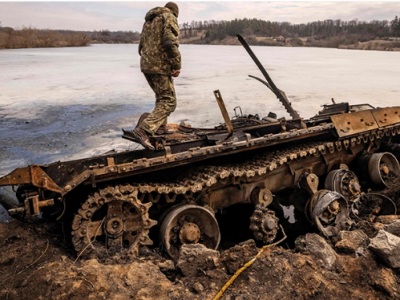
Ukraine has become a major state in Central Europe for the first time in modern history, former U.S. Secretary of State Henry Kissinger writes in an article for Spectator.
"Aided by its allies and inspired by its President, Volodymyr Zelensky, Ukraine has stymied the Russian conventional forces which have been overhanging Europe since the second world war. And the international system – including China – is opposing Russia’s threat or use of its nuclear weapons.
This process has mooted the original issues regarding Ukraine’s membership in Nato. Ukraine has acquired one of the largest and most effective land armies in Europe, equipped by America and its allies. A peace process should link Ukraine to Nato, however expressed. The alternative of neutrality is no longer meaningful, especially after Finland and Sweden joined Nato. This is why, last May, I recommended establishing a ceasefire line along the borders existing where the war started on 24 February. Russia would disgorge its conquests thence, but not the territory it occupied nearly a decade ago, including Crimea. That territory could be the subject of a negotiation after a ceasefire.
If the pre-war dividing line between Ukraine and Russia cannot be achieved by combat or by negotiation, recourse to the principle of self-determination could be explored. Internationally supervised referendums concerning self-determination could be applied to particularly divisive territories which have changed hands repeatedly over the centuries.
The goal of a peace process would be twofold: to confirm the freedom of Ukraine and to define a new international structure, especially for Central and Eastern Europe. Eventually Russia should find a place in such an order.
The preferred outcome for some is a Russia rendered impotent by the war. I disagree. For all its propensity to violence, Russia has made decisive contributions to the global equilibrium and to the balance of power for over half a millennium. Its historical role should not be degraded. Russia’s military setbacks have not eliminated its global nuclear reach, enabling it to threaten escalation in Ukraine. Even if this capability is diminished, the dissolution of Russia or destroying its ability for strategic policy could turn its territory encompassing 11 time zones into a contested vacuum. Its competing societies might decide to settle their disputes by violence. Other countries might seek to expand their claims by force. All these dangers would be compounded by the presence of thousands of nuclear weapons which make Russia one of the world’s two largest nuclear powers.
As the world’s leaders strive to end the war in which two nuclear powers contest a conventionally armed country, they should also reflect on the impact on this conflict and on long-term strategy of incipient high–technology and artificial intelligence. Auto-nomous weapons already exist, capable of defining, assessing and targeting their own perceived threats and thus in a position to start their own war.
Once the line into this realm is crossed and hi-tech becomes standard weaponry – and computers become the principal executors of strategy – the world will find itself in a condition for which as yet it has no established concept. How can leaders exercise control when computers prescribe strategic instructions on a scale and in a manner that inherently limits and threatens human input? How can civilisation be preserved amid such a maelstrom of conflicting information, perceptions and destructive capabilities?
No theory for this encroaching world yet exists, and consultative efforts on this subject have yet to evolve – perhaps because meaningful negotiations might disclose new discoveries, and that disclosure itself constitutes a risk for the future. Overcoming the disjunction between advanced technology and the concept of strategies for controlling it, or even understanding its full implications, is as important an issue today as climate change, and it requires leaders with a command of both technology and history.
The quest for peace and order has two components that are sometimes treated as contradictory: the pursuit of elements of security and the requirement for acts of reconciliation. If we cannot achieve both, we will not be able to reach either. The road of diplomacy may appear complicated and frustrating. But progress to it requires both the vision and the courage to undertake the journey."