make preferable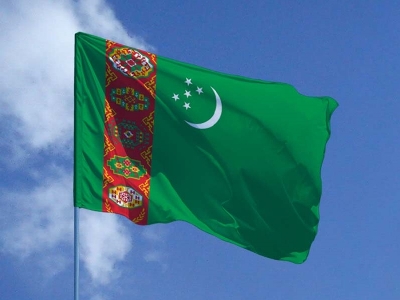
Turkmenistan is becoming an object of fierce geopolitical competition between external forces, East and West, according to an article by the Jamestown Foundation.
Since independence in 1991, Turkmenistan has attracted only occasional attention because of its extreme degree of isolation from the outside world, not unlike North Korea. As a result of this posturing, events inside the country remain unnoticed by most radars. Ashgabat remains firmly entrenched in this position because it faces high levels of poverty and the threat of an Islamist insurgency from Afghanistan, raising fears that almost any change in the system could destabilize the situation. This is most likely due to Ashgabat's touted policy of strict neutrality, a principle enshrined in the constitution of this Central Asian country that does not allow it to join Moscow-led organizations such as the Collective Security Treaty Organization (CSTO) or Ankara, such as the Organization of Turkic States (OTS).
But now all this seems set to change, as Turkmenistan becomes an object of fierce geopolitical competition between external forces, East and West, who want the country to become more closely aligned with them, and Moscow, which hopes to keep Turkmenistan neutral in order to block this trend.
With a new president this year - Serdar Berdymukhamedov succeeded his father, Gurbanguly Berdymukhamedov, in March 2022 - Turkmenistan itself has become more active internationally. In part, of course, this reflects what some see as the new leader's attempts to strengthen his own credibility and partly avoid the shadow of his father. But a more important motivating factor comes from abroad, as a result of efforts by a variety of powers, from China and Iran to Turkey and the European Union, to draw Ashgabat into their orbit.
China, Iran and Afghanistan have "invaded" Ashgabat, with Beijing being particularly successful, while Tehran and Kabul are also making progress. But the more significant steps on this geopolitical chessboard have been made by the EU and Turkey, as well as Moscow's attempts to counter their approaches.
On December 6 and 7, Turkmen Foreign Minister Rashid Meredov met with his Russian counterpart Sergei Lavrov, who stressed that Moscow views Ashgabat as "our closest friend and strategic partner," to which Meredov reciprocated. But in a sign that Moscow has made little progress in its hopes for Turkmenistan's inclusion in the CSTO or EEU, the meeting ended with agreements only on minor issues, including student exchanges and the opening of offices of national railway agencies.
Then, on December 11, Terhi Hakala, a Finnish diplomat who is the EU special representative for Central Asia, traveled to Ashgabat to attend the International Neutrality Day celebrations marking the 27th anniversary of Turkmenistan's declaration of that status. While there, Hakala discussed a wide range of issues with his Turkmen hosts that focused on expanding ties between Turkmenistan and the EU, thereby redefining the nature of neutrality by glorifying it, in direct contrast to Moscow's method.
On December 14, President Berdymukhamedov, along with his father, the former president, hosted Turkish President Recep Tayyip Erdogan and Azerbaijani President Ilham Aliyev at a resort on the Caspian coast. The summit, originally planned more than a year ago but postponed, worried Moscow, which feared it would be an excuse for Turkey to gain a foothold in Central Asia at Russia's expense. Moscow is concerned both about the possibility of Turkey getting Ashgabat to agree to join the CTA and about the potential expansion of Turkmen gas flow through the Caspian to Turkey, rather than southward through Iran, as the Kremlin prefers.
During the event, Turkey and Azerbaijan did not get everything they wanted. Turkmenistan refrained from joining the CTA, which caused jubilation in Moscow. Nevertheless, the three countries agreed to expand previous efforts to transport more Turkmen gas westward across the Caspian, thereby bypassing Russia and helping Turkey expand its influence in the region. Although Moscow observers have suggested that Ashgabat organized the meeting to directly emphasize Neutrality Day and thus reaffirm its independence, the location of the meeting may have mattered more than when.
Symbolically, the meeting on the Caspian shows Ashgabat looking west, not north, to Russia, or south, to Iran; and in practice, this location calls for special attention both to resolving disputes over offshore oil and gas facilities between Baku and Ashgabat and to the growing power of the Turkmen fleet in the South Caucasus, where it is becoming powerful enough to potentially challenge the long-dominated Russian Caspian flotilla. Taken together, this means that in geopolitical terms Turkmenistan is now more active than ever before.
This should worry Moscow, which has long maintained Turkmenistan's neutrality as the cornerstone of its efforts to block any expansion of Turkish influence in Central Asia. After all, if Ashgabat does not join Turkish projects, it will be much harder for Ankara to project power in the region and easier for the Kremlin to continue its traditional divide-and-conquer approach there.
After three meetings attended by its leaders in the past 10 days, Turkmenistan seems likely to continue to insist on its neutrality so as not to anger Moscow. Nevertheless, Ashkhabad will undoubtedly increasingly reconsider this position, implying that it will not only look for partners in the Kremlin. This would be acceptable in most capitals, but not in Moscow, which not only wants Turkmenistan to remain neutral, but also to do it the way Russia prefers. The fact that this is no longer possible prepares the ground for potentially dramatic steps in the near future that will make the world pay attention to Turkmenistan much more closely than it has in the past.