make preferable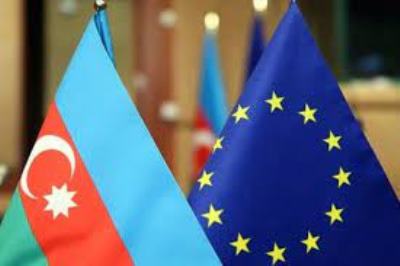
Hungarian energy experts doubt that the new project between the EU and Azerbaijan is environmentally friendly and safe.
Azerbaijan agreed Saturday to supply the European Union with electricity via a submarine cable running through Georgia and Romania to Hungary, signing an agreement in Bucharest.
"We will build the world’s longest undersea electricity transmission line, bringing cheap, green energy to Hungary,” Orbán posted on Facebook, describing the project as an “energy megadeal”.
According to Hungarian Minister of Foreign Affairs and Trade Peter Szijjártó, the deal includes a 3-gigawatt power plant with a 1,195-kilometer submarine section powered by green electricity from wind power generated in Azerbaijan, for which Baku is currently seeking investors.
According to him, the World Bank will allocate €2.5 million for the feasibility study, which should be completed by the end of 2023, while the European Commission has allocated €2.3 billion for the project.
The project will help strengthen our security of supply by bringing renewable electricity to the European Union via Romania and Hungary, said European Commission President Ursula von der Leyen.
However, Hungarian experts are skeptical about the project, according to media partner EURACTIV Telex.
In addition to concerns about human rights and claims that such sums are better spent on energy production closer to home, experts fear that the power line will reduce Russia's influence in Azerbaijan and, therefore, potentially increase Turkey's excessive influence in a region prone to local conflicts.
In addition, experts are concerned that as the EU ramps up gas imports from Azerbaijan, electricity imports could also lead to overdependence rather than diversification.
While the EU talks about "freedom" from Russian gas for Central and Eastern Europe and the Balkans thanks to increased imports from Azerbaijan, skeptics warn that it will have to pay the price - increased dependence on a country involved in conflict and with a recent history of bribery and corruption in Europe.
Moreover, Jozsef Turai, managing director of T-Energy Consulting Ltd, does not believe that the electricity produced in Azerbaijan and Georgia can be truly clean, despite promises of investments in wind power.
As of 2021, renewable energy accounts for less than 5% of Azerbaijan's electricity production.
In Georgia, renewable energy sources, mostly hydropower, account for 75% of total electricity production. Last year, however, local power plants produced 12.6 TWh of electricity and consumed 13.1 TWh, which means that Tbilisi is a net importer of electricity.
Moreover, this amount of electricity, once the cable from Romania to Hungary is laid, will likely require licensing and integration of the new interconnection between the two EU member states into the ENTSO-E system, the European Association for Transmission System Operators Cooperation.
This is because there is no long-term capacity reservation in the EU regional electricity market, only short-term algorithmic distribution, and it would be impossible to physically redistribute the already limited capacity of the existing transmission line between Romania and Hungary.