make preferable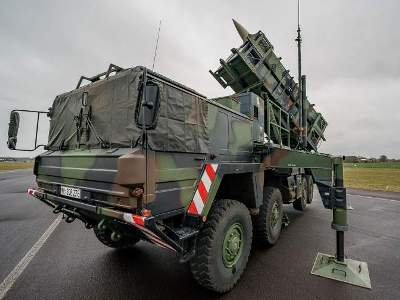
The Biden administration has crossed a new line in its support for Ukraine, announcing its willingness to send Patriot air and missile defense systems. The system, which includes powerful interceptor missiles and radar, is likely to prove very effective for Ukraine and marks a significant step forward in the scale and complexity of U.S. support, The Guardian reported.
Earlier, Joe Biden ruled out sending Patriot systems to Ukraine. The shift in policy appears to have come about because Russia has actively targeted Ukraine's civilian critical national infrastructure, leaving much of the country without power.
The Patriot is one of the world's most powerful air and missile defense systems. Over the past five years, Saudi Arabia has shot down hundreds of Iranian-designed missiles fired by the Houthis using this system.
It is important to note that the system will not provide immediate protection, so Russian strikes against Ukraine's energy infrastructure are likely to continue in the short term. The Patriot is a complex system to operate as well as maintain. It will take time for the Ukrainians to sustainably operate the system.
As Ukraine's stockpile of air defense missiles has dwindled, the country has become increasingly dependent on international support, just as it now relies on its partners for much of its artillery ammunition and armored vehicles. This dependence comes with some risks, especially for systems that Ukraine's partners have limited stocks of.
Some fear that providing some military support to Ukraine could lead to a broader escalation, but that was not the reason for the U.S. reluctance to send Patriot systems. The U.S. has far fewer than its own operational analysis suggests are needed to protect its forces in the Indo-Pacific region. In addition, there continues to be demand for missiles from existing users, from Sweden to Saudi Arabia: the latter expends a significant number of missiles each month to protect its critical national infrastructure. The level of missile production, meanwhile, is low.
In some respects, this problem mirrors a broader problem with Ukraine's arms supply. Ammunition consumption by the Ukrainian Armed Forces far exceeds available supplies, and their artillery is wearing out barrels faster than they can be replaced. The devastation of the NATO defense industry has left the alliance in a poor position to support prolonged high-intensity operations. In the case of systems such as Patriot, the task is more difficult because it takes much longer to produce high-precision weapons such as air defense missiles than it does to produce unguided artillery shells.
A Russian invasion of Ukraine should revive NATO's industrial base - investing in military factories and critical machine tools - but this will take time. In the period before more supply becomes available, and with the current pressure on demand, there is also the risk that by supplying key systems to Ukraine, the West is doing so at the expense of its position of containment vis-à-vis China because of its threats to Taiwan.
Faced with such competing pressures, the U.S. and other partners have had to carefully balance the support they provide to Ukraine between the systems its military can be trained on, those that NATO's defense industry can support, and their own security needs.
In this context, while Patriot offers a good option for defeating cruise and ballistic missiles aimed at Ukrainian cities, it is important that local air defense officers understand that they cannot expend an endless supply of this ammunition, and prioritize them accordingly.
The Patriot is certainly capable of shooting down Iranian-made Shahed-136 missiles. But if it is used in this role, Kiev will quickly run out of missiles. This has already happened with the GMLRS long-range missile delivered to Ukraine. Although its forces were initially cautious about using GMRLS against high-priority targets, they were increasingly used more widely, contributing to the operational success in liberating Kherson, but far exceeding the level of consumption of these missiles supported by Ukraine's partners.
Providing Patriot, like other systems, is not a panacea. They offer Ukraine protection against a specific threat. But large-scale deployment of affordable and sustainable means to combat other threats to Ukraine's energy security will require innovative thinking and investment from Ukraine's partners. It is also vital to global stability that the provision of these systems be accompanied by the ability to industrially resupply NATO - and to convince China that production can be sustained in the event of a larger conflict.