make preferable
G7 foreign ministers have called on the Taliban to urgently lift the ban on women working in the aid sector in Afghanistan, AFP reports.
The ban was the latest blow to women's rights in Afghanistan since the Taliban returned to power last year after the shameful withdrawal of U.S. and NATO troops.
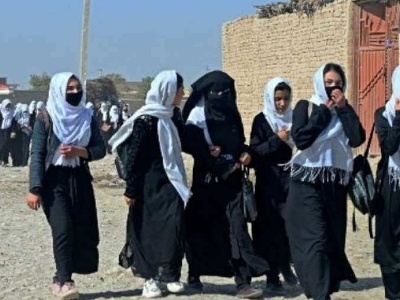
They banned women from attending universities earlier this month, sparking global outrage and protests in some Afghan cities.
G7 ministers, along with ministers from Australia, Denmark, Norway, Switzerland and the Netherlands, said they were "gravely concerned that the Taliban’s reckless and dangerous order barring female employees of national and international non-governmental organizations (NGOs) from the workplace puts at risk millions of Afghans who depend on humanitarian assistance for their survival."
“We call on the Taliban to urgently reverse this decision," the British Foreign Office said in a statement.
Six aid organizations have suspended operations in Afghanistan in response to the ban.
The International Rescue Committee, which provides emergency response in health, education and other areas and employs 3,000 women across Afghanistan, also said it was suspending operations.
“Women are absolutely central to humanitarian and basic needs operations. Unless they participate in aid delivery in Afghanistan, NGOs will be unable to reach the country’s most vulnerable people to provide food, medicine, winterization, and other materials and services they need to live,” the G7 statement said.
“The Taliban continue to demonstrate their contempt for the rights, freedoms, and welfare of the Afghan people, particularly women and girls,” it added.
Having returned to power last August, the Taliban has already banned teenage girls from high school. Women have also been forced out of many government positions and are not allowed to travel without a male relative.
UN agency heads, joining the call to lift the ban, said female personnel play a key role in all aspects of the humanitarian response in Afghanistan.
They are teachers, nutritionists, team leaders, health workers, nurses, doctors and organizational leaders. They have access to populations that their male counterparts cannot reach. They save lives, the Inter-Agency Standing Committee on Afghanistan, which brings together the UN and other international humanitarian aid organizations, said in a statement late Wednesday night.
G7 foreign ministers call on Taliban to urgently lift ban on women's work in aid sector in Afghanistan