make preferable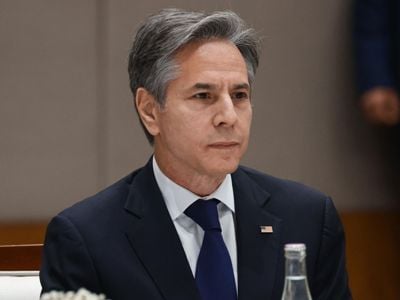
US Secretary of State Antony Blinken asked new Foreign Minister Eli Cohen to convey messages on to Russia in a Monday phone call, a senior diplomatic official told The Times of Israel on Tuesday. Cohen spoke to his Russian counterpart Sergey Lavrov on Tuesday afternoon, and passed along the messages, The Times of Israel reported.
The Israeli official, however, would not reveal what the American messages were.
Neither the Israeli nor the US readouts mentioned any talk of the 10-month-long war in Ukraine. The US State Department did not respond to a request for confirmation.
The Israeli official said that Blinken was aware of the scheduled call with Lavrov before he spoke with Cohen on Monday.
Speaking to Israeli diplomats on Monday, Foreign Minister Cohen revealed that he would be talking to Lavrov the next day. He did not indicate any scheduled call with his Ukrainian counterpart Dmytro Kuleba. Around midday Tuesday, Israel requested a call with Kuleba.
A senior Ukrainian official had said that Kyiv would expect Cohen to delay or cancel his call with Lavrov, and speak to Kuleba first—which did not happen. The official indicated that if Cohen were to hold a conversation with Lavrov first, Kuleba might refuse any call with Cohen in the near future.
The Israeli diplomatic official firmly rejected the notion that Israel was changing its policy on the Russia-Ukraine war, calling it “confusion.”
At the start of the Ukrainian conflict, Israel’s then-prime minister Naftali Bennett held a handful of calls with both Russia’s President Vladimir Putin and Ukrainian leader Volodymyr Zelenskyy, seeking to exploit Israel’s working ties with both countries to help mediate a ceasefire to end the war.
But he failed to make headway after several weeks, and eventually put aside the effort to focus on political turmoil back home.
Israeli sources told The Times of Israel that Prime Minister Benjamin Netanyahu would be open to mediate if one of the sides asked him to.