make preferable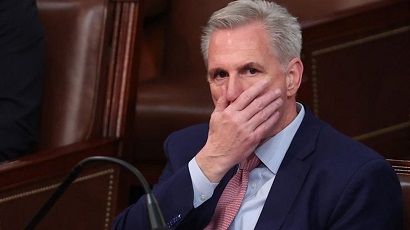
On a day of political drama that hasn't happened in Congress in a century, Republican leader Kevin McCarthy failed again in his bid to be elected speaker of the U.S. House of Representatives, the BBC reports.
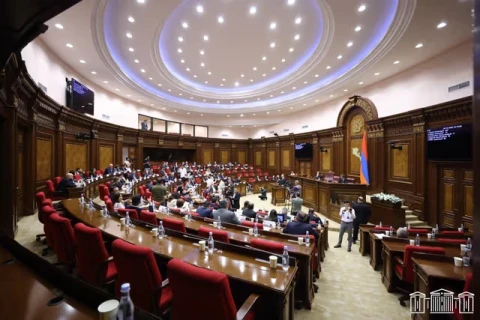
The House of Representatives ended Tuesday night without a speaker - the first time since 1923 that they failed to elect a leader after a first-round vote.
The start of the new Congress should have been a victory for the Republican Party, which gained control of the lower chamber after the November election. Instead, McCarthy faced a revolt within his own ranks.
The California congressman has lost three consecutive votes for speaker, and it remains to be seen what his path to victory might be when the House returns Wednesday to try again. They will continue to vote until someone gets a majority.
And even if McCarthy finds a way, as analysts warn, the turmoil in the House portends a tumultuous two-year war between moderate and right-wing Republicans on each other.
Republicans took the House of Representatives in November by a narrow margin, so McCarthy had only a few votes left to become speaker. This allowed a group of hard-line conservatives to unite and oppose his candidacy.
According to Republican observers, the split had been brewing for a long time.
Kevin McCarthy has long been unfriendly with some segments of the caucus, and he's made a lot of enemies an anonymous source told Republican ranks. - There are people who don't like him for political and personal reasons.
McCarthy has entered into negotiations with his detractors who see him as too mainstream and power-hungry, offering concessions to try to win their votes. At one point, he reportedly agreed to change House rules to make it easier to oust the incumbent speaker, thereby giving his opponents a huge opportunity to limit his power.
The futility of this approach became apparent on Tuesday.
In three consecutive votes, McCarthy failed to reach the necessary threshold of 218 votes. Although the Republicans hold 222 seats, a bloc of 19 far-right Republicans has strengthened in opposition to him. They oppose Mr. McCarthy on ideological and personal grounds, but also see an opportunity to use the narrow Republican majority to force further concessions.
In one of the most dramatic moments of the day, they even nominated Representative Jim Jordan to challenge him, just minutes after Jordan himself nominated McCarthy for Speaker.
Even after Jordan, who is a leading figure in the hard-right Freedom Caucus, urged Republicans to rally around McCarthy on the third ballot, 20 Republicans voted for Mr. Jordan, again denying McCarthy victory.
Democrats, meanwhile, remained united in their support for their party's new leader, Representative Hakeem Jeffries of New York.
Political observers in Washington began to put forward various theories about how this might end.
According to Ruth Bloch Rubin, a political scientist at the University of Chicago who studies party affiliation, as it stands, McCarthy "is essentially a hostage to one side of his party.
McCarthy has promised not to make any more concessions, but he may have no choice. He may try to sway stubborn lawmakers to his side by appointing them to committees or new leadership positions.
On Wednesday, lawmakers will meet for a fourth time, though it remains to be seen if the stalemate can be broken.