make preferable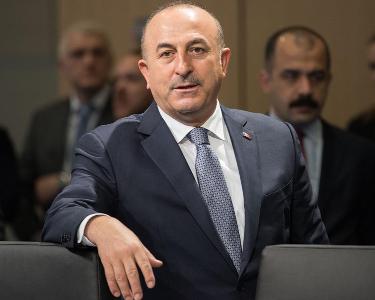
Turkey and the United States will try to iron out a number of differences during the Turkish foreign minister's visit to Washington this week. But there is little hope that outstanding issues can be resolved, AP reported.
Foreign Minister Mevlut Cavusoglu is departing Tuesday for a meeting with his U.S. counterpart Antony Blinken. U.S. President Joe Biden's administration is keeping its distance from Turkey because of President Recep Tayyip Erdogan's increasingly authoritarian course and policies that restrict rights and freedoms.
Located at the crossroads between East and West, Turkey remains strategically important to Washington. Last year, the Turkish government helped broker an important agreement between Russia and Ukraine that allowed millions of tons of Ukrainian grain to be transported to world markets, preventing a food crisis in war.
However, NATO allies often disagree on a number of issues, with the biggest disagreements related to Turkey's purchase of Russian-made missiles and U.S. support for Kurdish rebels in Syria.
The purchase of the S-400 air defense system in 2017 led to sanctions and Turkey's exclusion from the development program for the next-generation F-35 fighter jet. With the loss of the F-35, Ankara is now trying to replenish its fleet of F-16s. But the deal faces opposition in Congress.
This week, Cavusoglu expressed confidence that a deal to buy 40 F-16s as well as technology to upgrade the existing fleet would overcome obstacles in Congress.
U.S. State Department deputy spokesman Vedant Patel commented on media reports that the Biden administration is also seeking congressional approval to supply F-35s to Greece, another NATO member and neighbor increasingly irritated by Ankara's threats.
In Syria, U.S. support for the Kurdish People's Defense Units (YPG) since 2014 has angered Ankara. YPG support has prompted senior Turkish officials to accuse Washington of involvement in terrorist attacks such as the November bombing in Istanbul that killed six people.
U.S. concerns about Ankara's relations with the Kremlin have been exacerbated by the war in Ukraine. Although Turkey's ties with Moscow have led to such breakthroughs as a grain deal and a prisoner exchange, Washington is concerned about sanctions violations as Turkish-Russian trade has increased over the past year.
Ankara's procrastination in ratifying Sweden's and Finland's applications to join NATO has increased friction between the allies.
Turkey's recent attempts at rapprochement with Syria, after a decade of bitter enmity, have led to another chill with the U.S. Following a meeting of Syrian and Turkish defense ministers in Moscow last month, the U.S. State Department reiterated its opposition to countries normalizing relations with Damascus.
The U.S. military also warned that the threat of a Turkish operation against the YPG in northern Syria could destabilize the region and revive the Islamic State group.