make preferable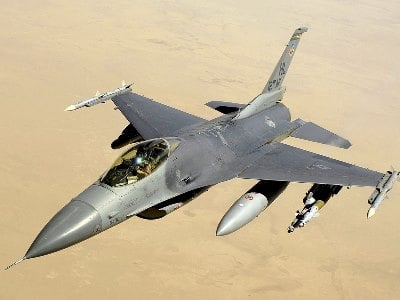
Turkish Foreign Minister Mevlut Cavusoglu arrived in Washington trying to settle differences with Secretary of State Antony Blinken. These include a plan to sell Turkey forty F-16 fighter jets and nearly eighty upgrade kits, as well as Ankara's purchase of Russia's S-400 air defense system, writes The National Interest.
But given that Turkey is a major destructive force in the region, it is unclear why the Joe Biden administration considers the sale of F-16s to be consistent with U.S. national security interests and long-term NATO unity. The State Department's letter to Congress recommending the sale even stated that Turkey is an important deterrent to detrimental influence in the region.
In fact, Turkey has decided to capitalize on its unpalatable value. For example, in 2019, it tried to block NATO plans to defend Poland and the Baltic states unless they called the Kurdish-led Syrian Democratic Forces terrorists. It is doing the same with Finland and Sweden's applications for NATO membership if, among other things, Sweden does not hand over a number of political refugees to Ankara.
As Nate Schenkkan, then director of the Freedom House Project, observed five years ago, while hostage-taking is part of Turkey's foreign policy, it had unpleasant consequences in Ankara's attempt to exchange Pastor Andrew Brunson for Islamic preacher Fethullah Gulen.
A cornerstone of U.S. foreign policy in the region is the Eastern Mediterranean Security and Energy Partnership Act, which designates Greece as a valued NATO member, Israel as a reliable ally, and Cyprus as a key strategic partner. In 2021, the U.S.-Greece Mutual Defense Cooperation Agreement (MDCA) was updated to strengthen cooperation.
In contrast, Turkey adopted its Blue Homeland maritime strategy, which claims 462,000 square kilometers in the Eastern Mediterranean, Aegean and Black Seas, including Greek and Cypriot territorial waters. Erdogan also threatened Greece with a missile strike.
Against this background, supplying Turkey with additional weapons makes no strategic sense. According to the Turkish press, the sale of F-16s has already been decided. The Biden administration intends to seek approval for the sale that Ankara has ratified the agreement for Finland and Sweden to join NATO, the Hürriyet Daily News reported. If so, the Biden administration has agreed to a policy of appeasement.
Former national security adviser John Bolton takes a different view and believes Turkey's NATO membership should be questioned because of its support for Russia.
Turkey will hold presidential and parliamentary elections this June. If the playing field were level, Erdogan would be defeated, not least because of Turkey's cash-strapped economy and monumental inflation.
Erdogan has already imprisoned Selahattin Demirtas, co-chairman of the pro-Kurdish People's Democracy Party, and the Turkish Constitutional Court has suspended funding for the PDN over alleged links to terrorism. Erdogan's main rival, Istanbul Mayor Ekrem Imamoğlu, was sentenced to prison and a ban on political activity on charges of insulting election commission officials. But Erdogan's three rivals also stand a good chance of replacing him.
Now Erdogan is considering a proven way to win popular support: a fourth invasion of Syria against America's Kurdish allies. For this he needs Moscow's approval, and for Washington to look the other way.
If all this fails, there are fears that Erdogan may try to overthrow the constitutional order with the support of his own militia, SADAT.