make preferable
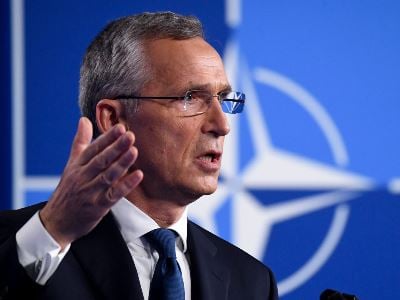
NATO Secretary General Jens Stoltenberg on Wednesday called on 30 member nations to commit to spending at least 2 percent of their gross domestic product on defense by a deadline of 2024, The Associated Press reported.
NATO allies agreed in 2014 to end the spending cuts they made after the Cold War and move toward spending 2 percent of GDP on their defense budgets by 2024. That commitment expires next year, and NATO is working on a new target.
Obviously, if it was right to commit to spending 2 percent in 2014, it's even more right now because people live in a more dangerous world, Stoltenberg told reporters after presiding over the NATO defense ministers meeting, where the first high-level discussion on the issue took place.
There's a full-scale war in Ukraine, in Europe, and then the constant threat of terrorism, and also the challenges that China poses to NATO security, so, clearly they need to spend more, he said.
Instead of changing 2 percent, they hould go from looking at 2 percent as a ceiling to 2 percent of GDP as a floor and a minimum, Stoltenberg said.
He added that this should not be a long-term view or a move toward it, but rather an immediate commitment to spend at least 2%.
NATO allies in Europe and Canada have increased defense spending in 2022, adding about $350 billion to their budgets. According to NATO's most recent estimates, 10 countries are close to or above the 2% benchmark. Thirteen of the NATO members spend about 1.5 percent or less.
The U.S. spends more on its defense budget than all other allies combined, putting 3.47% of GDP into its military coffers, according to last year's NATO estimates. Some members of the North Atlantic Alliance have suggested that NATO should move to a 2.5% benchmark. Others say this is unrealistic.
Many nations insist that what matters most is the quality of equipment and the amount Allies contribute to NATO operations.
Turkey's economy, traditionally one of the largest defense-spending NATO countries, has suffered from inflation, and its military budget last year was only 1.22 percent of GDP, according to a North Atlantic Alliance estimate.
NATO leaders are expected to chart a way forward on this issue when they gather for their next summit in the Lithuanian capital of Vilnius in July.
Stoltenberg urges NATO member states to spend at least 2% of their GDP on defense