make preferable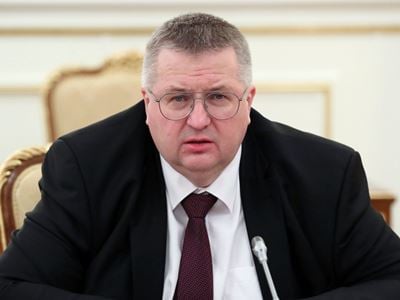
In an interview with TASS within the framework of the St. Petersburg International Economic Forum, Russian Deputy Prime Minister Alexey Overchuk spoke about the obstacles to unblocking transport communications between Armenia and Azerbaijan.
Earlier, you had noted that Russia is making considerable progress in reaching an agreement on the unblocking of transport communications between Azerbaijan and Armenia. When, according to you, can all controversial issues be settled once and for all?
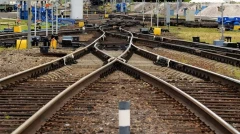
We held a meeting between the deputy prime Ministers of the Republic of Azerbaijan, the Republic of Armenia, and the Russian Federation in the format of a tripartite working group, as a result of which a comprehensive document was formed. It states that the unblocking of transport connections in the region will begin with the restoration of the railway, which will pass through the Yeraskh-Julfa-Meghri-Horadiz route. And, based on respect for the sovereignty of the parties, it defines the main approaches to the order of crossing the border between Azerbaijan and Armenia. None of the parties doubts that the individual sections of that road will be under the jurisdiction of the country in whose territory they are located. Thus, in connection with this road, Azerbaijani legislation will be applied in Azerbaijan, and Armenian legislation will be applied in Armenia. It seems that these are obvious things; but taking into account the relations that have been formed between the two countries and peoples, all this must be specified.
During the recent history, there were no relations between Armenia and Azerbaijan; there was a war, which was stopped with the direct participation of Russian Federation President Vladimir Vladimirovich Putin. However, armed clashes still take place on the border of the two countries and people are killed. Of course, it is very difficult for my colleagues to work in such an environment, but they sense their historical responsibility for the decision that our heads of state entrusted us to develop and continue to work towards unblocking transport communications.
It is difficult to find examples in the world when the warring parties sat down at the negotiating table and started talking about the restoration of transport links almost immediately after the cessation of hostilities. In our case, everyone realizes that there is no alternative to peace between Azerbaijan and Armenia, and the best way to achieve peace is to open the possibility of peaceful interaction for people, to build a shared road along which people and goods will travel, normal life, trade will begin, and old grievances will gradually fade into the background. .
Our tripartite working group of deputy prime ministers has developed a unique format of relations. It helps a lot that we come from the same great country, study with the same textbooks, watch the same movies, understand the same humor, so we find a common language on a human level. It is this intangible value that creates hope and helps to move forward. Thinking about the work of our group, you understand how important it is for peace in our shared Eurasian home not to lose that commonality in the post-Soviet space and to pass it on to the next generations.
The biggest problem is trust. It is precisely because of this that the negotiations are proceeding slowly. Ultimately, ordinary people—Azerbaijanis, Armenians, citizens of other countries—will travel on the road. How will they interact with each other when crossing the border? How will their safety be ensured when moving through the territory of another country? This is the main question today, which we want to answer together so that we can be sure that nothing bad will happen to these people in the territory of another country. And of course, what is happening at the border now affects all of us. It would be much easier to find solutions if the shooting stopped.