make preferable
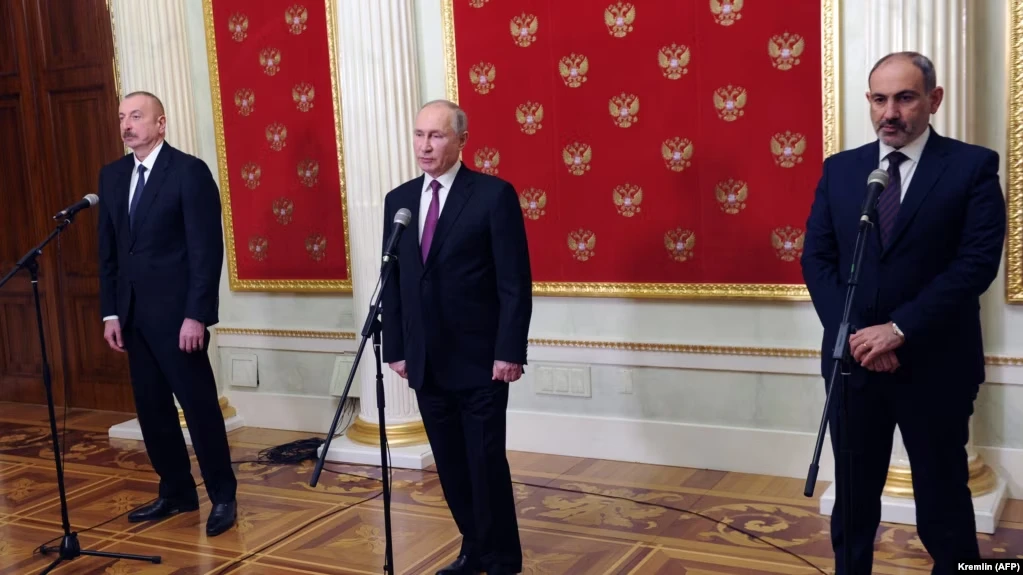
Today marks the sixth anniversary of the signing of the trilateral statement of November 9, 2020, which ended the 44-day Artsakh (Nagorno-Karabakh) war.
The aforesaid document signed by the leaders of Armenia, Russia, and Azerbaijan—Nikol Pashinyan, Vladimir Putin, and Ilham Aliyev—halted the war that had begun on September 27, 2020 at the positions occupied by the troops. The Armenian side handed over seven regions adjacent to Nagorno-Karabakh to Azerbaijan, and Russian peacekeepers were deployed in Karabakh.
However, a number of provisions of the nine-point statement were never implemented. In particular, the agreements on the lifting of the blockade of all regional economic and transport links as well as the exchange of prisoners of war and other detainees were not implemented.
According to the latest official data, 3,833 people were killed in this war on the Armenian side, of whom 3,755 were servicepersons and 78 were civilians. Six years later, the whereabouts of 191 people are still unknown, of whom 172 are servicepersons and 19 are civilians.
Almost three years after the trilateral statement, on September 19, 2023, Azerbaijan launched a large-scale military offensive against Nagorno-Karabakh, taking full control of the region. As a result, more than 100,000 Armenians were forced to leave their homes, and Karabakh’s former military and political leaders were captured and transferred to Baku, the Azerbaijani capital.
In June 2024, about a year and a half ahead of schedule, Russian peacekeepers completely withdrew from Nagorno-Karabakh, which was already depopulated of Armenians.
On August 8, 2025, Yerevan and Baku initialed a peace agreement in Washington, which, however, has not been signed to this day. Azerbaijan continues to posit amendments to Armenia’s constitution as a precondition, arguing that it contains territorial claims against Azerbaijan.