make preferable
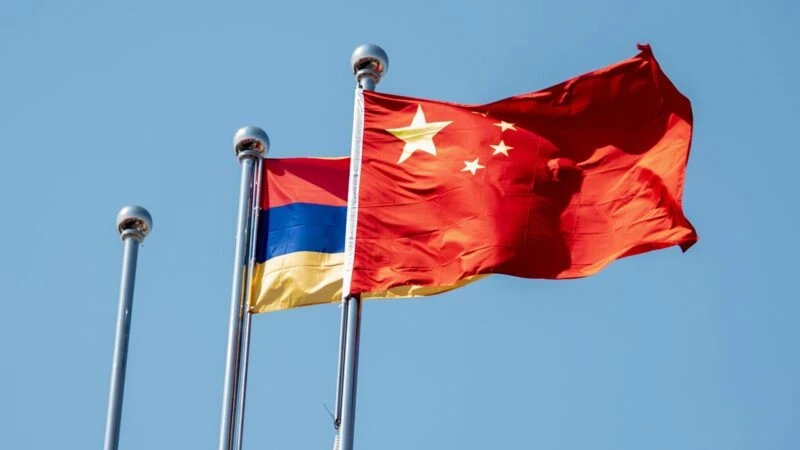
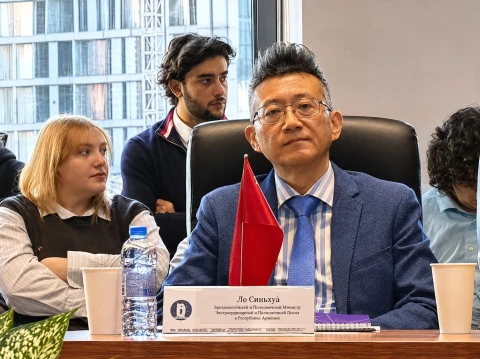
The priorities of China's 15th Five-Year Plan largely coincide with the key directions of Armenia's economic development: opening up new opportunities for bilateral cooperation. Ding Chao, deputy head of the Russian economy department at the Institute of Russian, Eastern European and Central Asian Studies under the Chinese Academy of Social Sciences, stated this during the international roundtable discussion "Russian-Chinese relations in a changing world: Together for peace and stability."
According to Ding, in conditions of growing global instability and uncertainty, China and Russia continue to remain important forces contributing to peace, joint development, and international cooperation. The Chinese economy, the analyst noted, is distinguished by high resilience and significant potential, and Beijing's consistent policy in terms of openness and external cooperation provides the world with a fairly clear long-term orientation.
Ding said that the need for the formation of stable transport and economic ties is especially acute for landlocked countries. In this context, he drew attention to the “Crossroads of Peace” project proposed by Armenia in 2023, which envisages the development of transport connectivity based on the principles of sovereignty, jurisdiction, equality, and reciprocity of countries.
The analyst recalled that the joint statement of China and Armenia adopted in August 2025 enshrines the readiness of the Armenian side to actively promote the One Belt, One Road initiative and the “Crossroads of Peace” project, together with China.
As per Ding, trade and economic cooperation between China and Armenia has maintained positive dynamics in recent years, and the complementary nature of the economies of the two countries and the potential for further cooperation between them are becoming more and more evident.
In his view, the coinciding of the priorities of China's 15th Five-Year Plan and the key directions of Armenia's economic development enables to outline new growth opportunities in scientific and technological innovations, environmental protection, and infrastructure construction, as well as provide a sustainable impetus to the further development of bilateral relations.