make preferable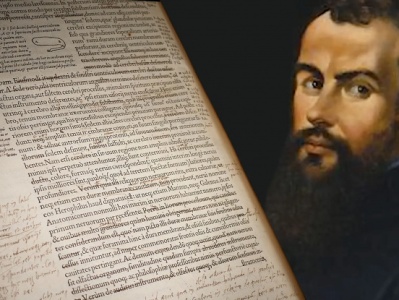
At the online auction Christie’s sold the book De humani corporis Fabrica (Of the Structure of the Human Body) by Andreas Vesalius, written in 1555. The cost of the lot amounted to $2.228 million.
It is noteworthy that in 2007, a Canadian doctor and connoisseur of ancient books Gerard Vogrinchich bought it for only $ 14,256 as a “defective” copy of the great work of the past, reports Techkult.
Vesalius’ work has been called one of the greatest scientific books in history for a reason. After the publication of De humani corporis Fabrica it became the main medical atlas in Europe, replacing the work of Galen, which doctors used for 1300 years. Vesalius conducted many studies of ancient books on medicine, summarized the collected information, corrected errors and supplemented them with new discoveries. In addition, he provided the book with detailed illustrations of human organs and known ailments.
Even during his lifetime, Vesalius’ work was repeatedly challenged, and he himself was persecuted, because of which he abandoned his work and destroyed his manuscripts. About 150 copies of De humani corporis Fabrica have survived to this day, but books with annotations in the margins have no value—they are considered to spoil the historical artifact. Vogrinchich, however, was of a different opinion—although he did not know the Latin in which the phrases were written, he realized from their structure that it was something important.
Vogrinchich went to great lengths to obtain copies of Vesalius’s surviving manuscripts, and when he compared the handwriting, it became clear that the entries in the margins of the book were by the hand of the master himself. Further research showed that these were revisions to a third, unpublished version of De humani corporis Fabrica, which Vesalius had not had time to finish because of persecution. So an ordinary old book turned out to be a unique work, which will now be exhibited in the museum of the Catholic University of Leuven.