make preferable
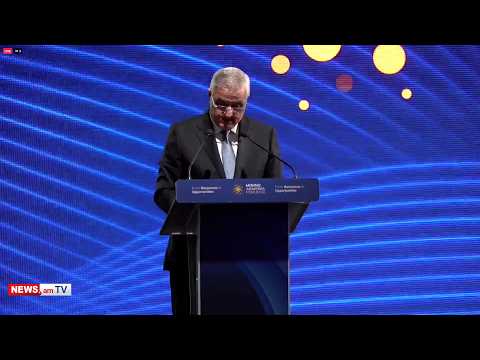
Peace between Armenia and Azerbaijan not only is possible, but is within reach. Armenian Prime Minister Nikol Pashinyan stated this during his speech at the 79th session of the UN General Assembly in New York Thursday.
Pashinyan added as follows, in particular: " Why do I think so? For a few specific reasons. Quite recently, on August 30, Armenia and Azerbaijan signed the Regulation on the Joint Activity of the Commissions on Delimitation of the state border between the two countries.
This is the first bilateral legal document signed between the parties. But what is more important with that document, Armenia and Azerbaijan agreed to set the 1991 Alma Ata Declaration as the basic principle of border delimitation between the two countries and will be guided by it.
This means that Armenia and Azerbaijan de jure reconfirm the principle of recognizing each other's territorial integrity and inviolability of borders that existed during the Soviet Union, which is a fundamental factor for establishing peace. Now it is de jure reconfirmed that the two countries have no territorial claims on each other.
What we have to do now is to take the next step and sign the Agreement on Establishment of Peace and Inter-State Relations between the Republic of Armenia and the Republic of Azerbaijan. The President of Azerbaijan and I have stated many times that at least 80 percent of the mentioned Agreement has been agreed upon.
Now, to seize this historic opportunity and to avoid the risk of reaching a deadlock, Armenia proposes to take what has already been agreed in the draft Agreement, sign it, have a peace Agreement between Armenia and Azerbaijan and then go on with negotiations on pending issues. We are ready to do this right now.
Why do we propose this? Because there is no precedent of a peace agreement or any agreement that would regulate and solve everything. It is practically not possible. After signing any agreement, two countries may always need to conclude new agreements and make new arrangements for this very reason.
No matter how comprehensive any agreement, many important issues need to be further addressed.
And in the case of Armenia and Azerbaijan, the agreed articles of the draft Peace Agreement actually contain provisions on peace, on not having territorial claims on each other and not putting forward such claims in the future, provisions on establishing diplomatic relations and a joint commission to oversee the implementation of the Peace Agreement, a provision on not interfering in each other's internal affairs, not using force and threat of force, and other important provisions.
Signing the Peace Agreement with the already agreed articles, will significantly facilitate the resolution of the non-agreed issues. The already agreed parts of the draft Peace Agreement provide tools for that: one of them is the diplomatic relations to be established between Armenia and Azerbaijan, and the second is the joint Armenia-Azerbaijan commission to oversee the implementation of the Peace Agreement. I mean, the existence of de jure peace between Armenia and Azerbaijan by signing the proposed Agreement, and the establishment of diplomatic relations, will result in changing the overall atmosphere and the perception of our Governments and Peoples, which will significantly facilitate the solution of the remaining issues."