make preferable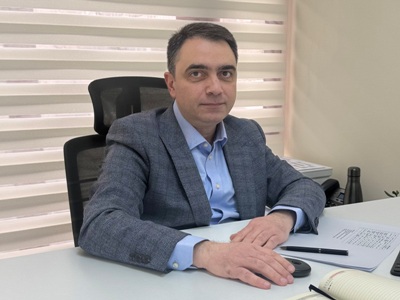
Armenian banks have already published their financial reports summarizing the results of the last quarter of 2024 and, essentially, the entire year. In an interview with Armenian News-NEWS.am, Vaghinak Stepanyan, Deputy Chairman of the Management Board of Unibank for implementation of projects and standards, discussed the achievements of the banking system and key development trends.
How would you assess the results of Armenia’s banking system and Unibank over the past year? What were the bank’s key accomplishments?
The net profit of Armenia’s banking system increased by about 60% compared to the previous year. Unibank had a profit of 10 billion AMD for the year. Notably, the Bank ranks among the top five banks in Armenia in terms of return on equity.
Unibank demonstrated dynamic growth: The bank’s assets grew by approximately 18%, reaching 340 billion AMD by the end of 2024, total capital increased by 14%, reaching 46.2 billion AMD, loans provided to customers amounted to approximately 200 billion AMD.
Much has been said about the development of the banking system over the past three years, particularly regarding profitability improvements and their underlying causes, with numerous analyses on the subject. In this regard, I would like to emphasize that the results of banks' operations in recent years have largely been shaped by prior investments in information technology and human capital.
Like other banks, Unibank has made and continues to make substantial investments in IT infrastructure. In particular, Unibank implemented and enhanced its own processing system several years ago.
Additionally, banks have allocated and continue to allocate significant financial resources to enhancing risk management systems, attracting highly qualified specialists, and improving employee qualifications.
Are you saying that banks were prepared for changes in the economic environment?
Yes, Armenia’s banking system was well-prepared for these changes. The technological solutions introduced, the risk management tools, the proper regulation and strict supervision of the financial system, and the presence of established payment and settlement systems and infrastructure enabled banks to withstand such transformative changes—particularly those caused by the large human and financial flows resulting from the Russia-Ukraine conflict.
Furthermore, the system was prepared not only in terms of technical infrastructure but also in terms of expertise. The knowledge and experience accumulated in banks, along with the implementation of risk management, compliance, and anti-money laundering systems, allowed for an accurate assessment of the situation and potential risks, as well as the efficient use and enhancement of existing capabilities.
Currently, banks operate automated screening systems with modern solutions, enabling them to protect the system from undesirable financial flows. Meanwhile, technological advancements and remote customer service tools, including a variety of mobile banking services, have allowed banks to effectively meet customer demand.
Returning to your first question, the key achievements of the past year include:
- Unibank launched the UBPAY Armenian payment and settlement system for money transfers.
- Expansion of leasing operations as a new financing tool aimed at modernizing the economy.
- Introduction of brokerage services for Unibank’s clients, a promising new business direction.
- Issuance and placement of $10 million in subordinated bonds, a new financial instrument for the Armenian market. The successful placement of these bonds demonstrates the confidence investors have in both the bank and the banking system as a whole. At the 2024 AMX Annual Awards, Unibank was recognized as the Best Equity Issuer on the Exchange and the Best in the Secondary Equity Market.
Additionally, at Visa Cashless Forum 2024, Visa awarded Unibank the Olympic Games Sponsorship Excellence Award, and Mastercard recently presented the bank with the Enhancement in Payment Solutions Award. Moving forward, Unibank will continue developing cashless payments and mobile technologies.
The bank also plans to increase its charter capital by issuing new shares, which will provide the necessary foundation for dynamic growth.
What major projects are planned for 2025?
One of my main areas of focus at Unibank is improving the internal control system, standardizing processes, and implementing related projects. An effective internal control system and structured internal procedures contribute to improved financial results, while the development of banking services and increased competition require continuous enhancement of internal systems. There is still a lot of work to be done in this regard.
Currently, we are actively working on improving the bank’s environmental and social risk management system, as well as implementing ESG principles and related reporting standards. This project is being carried out in collaboration with Agents for Impact, an international consulting firm.
What benefits does ESG implementation bring to banks, and why are banks investing in this area?
In line with global commitments to climate change and sustainable development, including the UN Sustainable Development Goals such as poverty reduction, quality education, gender equality, responsible production and consumption, and climate action, integrating ESG principles into an organization’s operations is an essential component of corporate social responsibility.
For banks, ESG implementation promotes innovation, attracts talent, reduces certain costs, expands access to sustainable financing sources, and enhances organizational reputation through transparent reporting.
We know that Unibank actively participates in social programs.
Unibank is actively involved in charitable and educational initiatives, including various government social assistance programs. The bank also regularly sponsors international technology conferences, such as the upcoming FINTECH360 conference in Yerevan this April.
Unibank also promotes a healthy lifestyle by sponsoring and participating in various sports events and tournaments. The bank provides significant support to the development of futsal, wrestling, and cycling in Armenia. Thanks to these efforts, Unibank’s futsal team, Unisport, has achieved major success in tournaments. As part of its social responsibility, the bank invests in providing a comfortable, modern work environment for employees and, most importantly, focuses on enhancing professional qualifications.
Unibank encourages employees to obtain international certifications and qualifications, funding their participation in training programs and conferences. These efforts have increased the number of internationally certified employees in the bank and, of course, improved overall service quality.
What are your expectations for 2025?
2025 is the Year of the Snake, which is said to symbolize wisdom, resilience and renewal. I believe these three qualities will ensure peace and stability.