make preferable
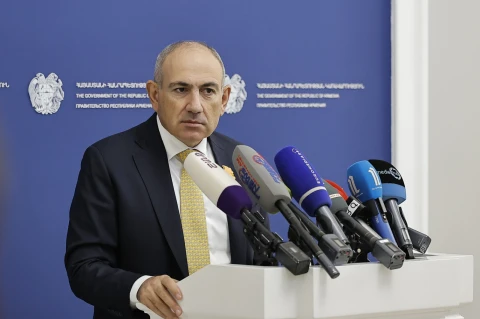
According to him, Armenia is politically ready to ensure transit from the Nakhchivan Autonomous Republic to the main part of Azerbaijan and vice versa through Armenian territory, but technically it is not yet ready due to the absence of infrastructure. This was stated by Armenian Prime Minister Nikol Pashinyan during the “Silk Road” forum in Georgia.
“Politically, we are also ready to ensure railway transit between Turkey and the Nakhchivan Autonomous Republic, as well as between Turkey and the main part of Azerbaijan, but the railways in these sections need repair or reconstruction. I am confident that the technical issues will be resolved within two to three years.
In the near future, pipelines will pass through Armenian territory, as well as electricity transmission lines connecting Azerbaijan-Armenia-Turkey. As I already mentioned, railway and road connections will also be ensured. All of this is being discussed within the framework of the TRIPP program. We are also conducting relevant negotiations with Turkey and Azerbaijan. We are also working with the United States to implement these agreements.
The most important condition for realizing all of this is the peace established between Armenia and Azerbaijan, achieved through the Washington summit. Now we are working to institutionalize this peace with Azerbaijan. We are working toward the signing and ratification of the pre-signed Washington agreement on peace and interstate relations between Armenia and Azerbaijan. In parallel, all transport connections will be gradually opened, which will bring historic changes to our region.
I am aware of opinions that transport projects in our region compete with each other. I strongly disagree with this view because the transport routes in our region complement each other, increasing the transit potential of the South Caucasus. The third point of the Washington declaration mentions the opening of the Persian Gulf–Black Sea railway, which will significantly increase not only Armenia’s, but also Georgia’s and Azerbaijan’s potential.
Dialogue between Armenia and Turkey, the peace established between Armenia and Azerbaijan, the TRIPP program, and the friendly relations of Georgia and Iran with regional countries will make the South Caucasus the most attractive transit corridor in north-south and east-west directions. This means that the infrastructure of all countries in our region will be overloaded, even if it is currently insufficient to handle these growing flows. The enormous international interest now focused on the South Caucasus is capital that we—Armenia, Georgia, and Azerbaijan—must use properly to ensure regional development and stability.
We finally have a historic opportunity to ensure not only peace but also the prosperity and development of the South Caucasus. After all, peace, prosperity, and development are inseparable companions of commercial cargo, pipelines, and electricity transmission lines—and vice versa. Commercial cargo, pipelines, and electricity lines are constant companions of peace and prosperity. Peace has come to our region, and all that remains for us to do is to increase cargo circulation, expand pipelines and electricity lines, and ensure the prosperity and development of the South Caucasus, which will further strengthen peace, which in turn will increase the volume and pace of prosperity and development for Armenia, Georgia, and Azerbaijan. I believe that the three leaders of the South Caucasus have enough will and wisdom to work not only individually but also together, of course in cooperation with our other neighbors and international partners.”